AI-Powered Smart Environmental Control Platform
On the basis of a hybrid model combining mechanism analysis and data modeling, advanced technologies such as artificial intelligence, big data, and digital twin are applied. Through machine learning, hidden operational patterns are identified, and edge computing is used to optimize key parameters, providing analytical tools for production management.
This enables optimal control of denitrification, desulfurization, and dust removal processes, ensuring stable and safe operation with compliant emissions, while achieving precise control, energy savings, reduced consumption, and intelligent production management.
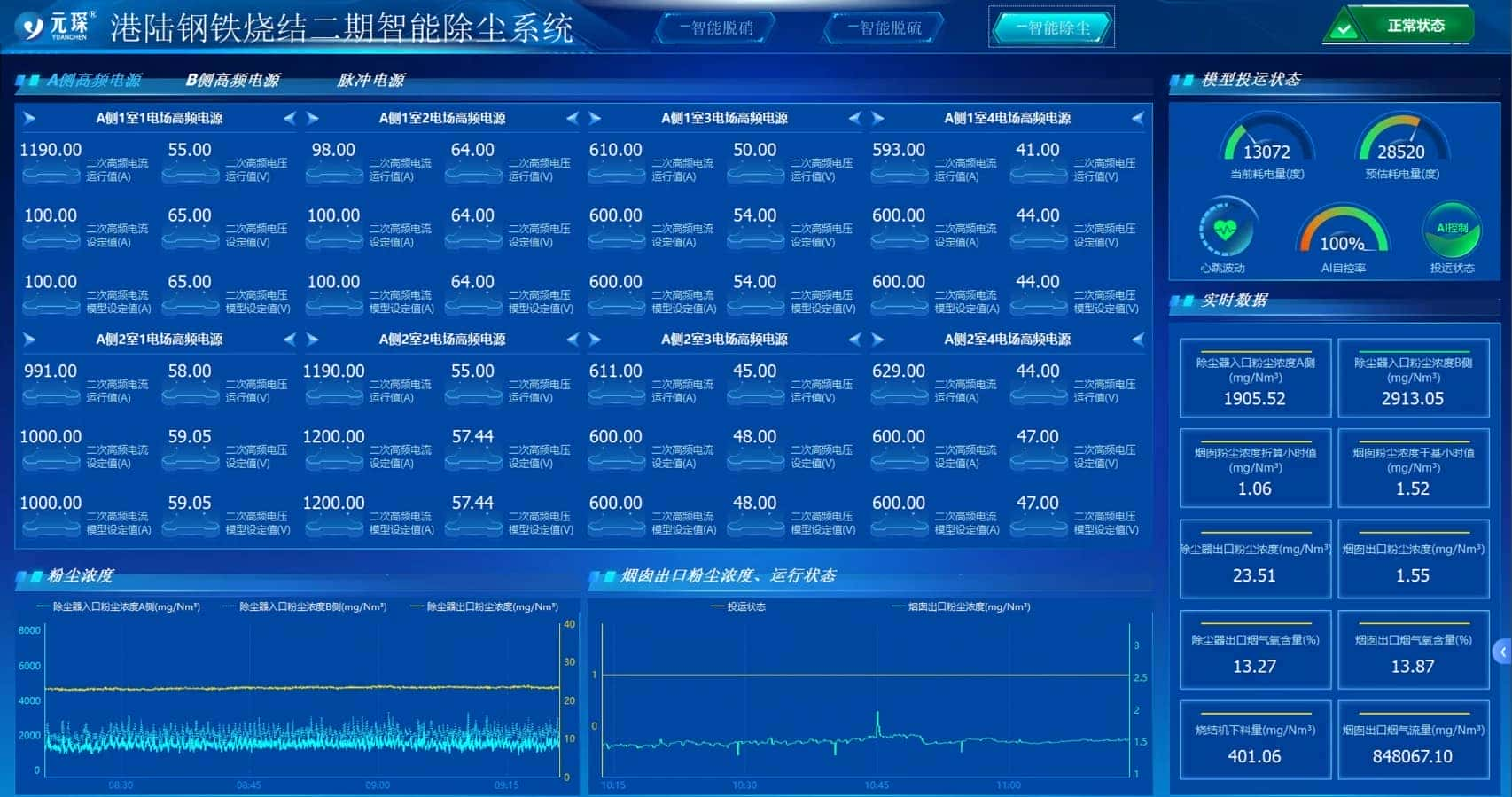
Intelligent Dust Collection System
Traditional dust collection systems are limited by DCS and cannot achieve automatic sectional control across multiple electric fields. As a result, control is often coarse or minimally adjusted, leading to higher energy consumption.
In contrast, intelligent control for electrostatic precipitators (ESP) and electrostatic–bag systems applies system modeling and operational optimization, using extensive historical data to automatically determine optimal parameter combinations under different operating conditions.
While ensuring stable and compliant emissions, it significantly reduces the energy consumption of the dust collection system.
Overall energy consumption
Reduced by 10%–40%
System improvement
Resolves aging and inconsistency issues
Outlet dust concentration
Stably maintained near target value
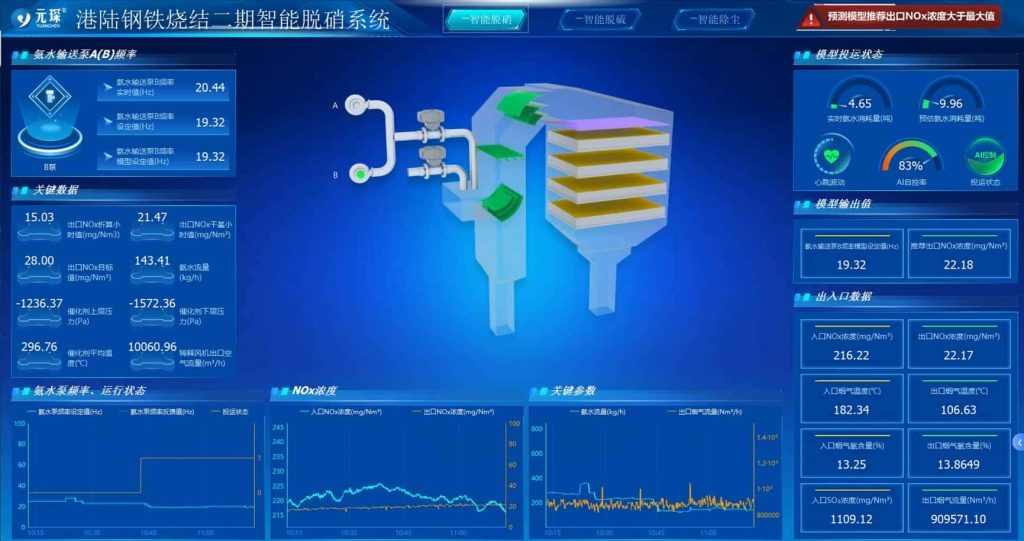
Intelligent DeNOx System
Traditional flue gas desulfurization often cannot achieve automatic control due to large system inertia, frequent disturbances, and single-mode control, leading to fluctuating or excessive SO₂ emissions and high energy and reagent consumption.
Intelligent desulfurization optimizes factors such as pH and multi-loop pump energy, and integrates SO₃²⁻ concentration forecasting to establish a mechanism- and data-driven predictive-control system, enabling smart FGD operations.
Ammonia reduction
10%–35%
Catalyst life
Increased by over 30%
Air preheater resistance
10%–30%
Desulfurization wastewater NH₄⁺ Reduced by 50%–80%
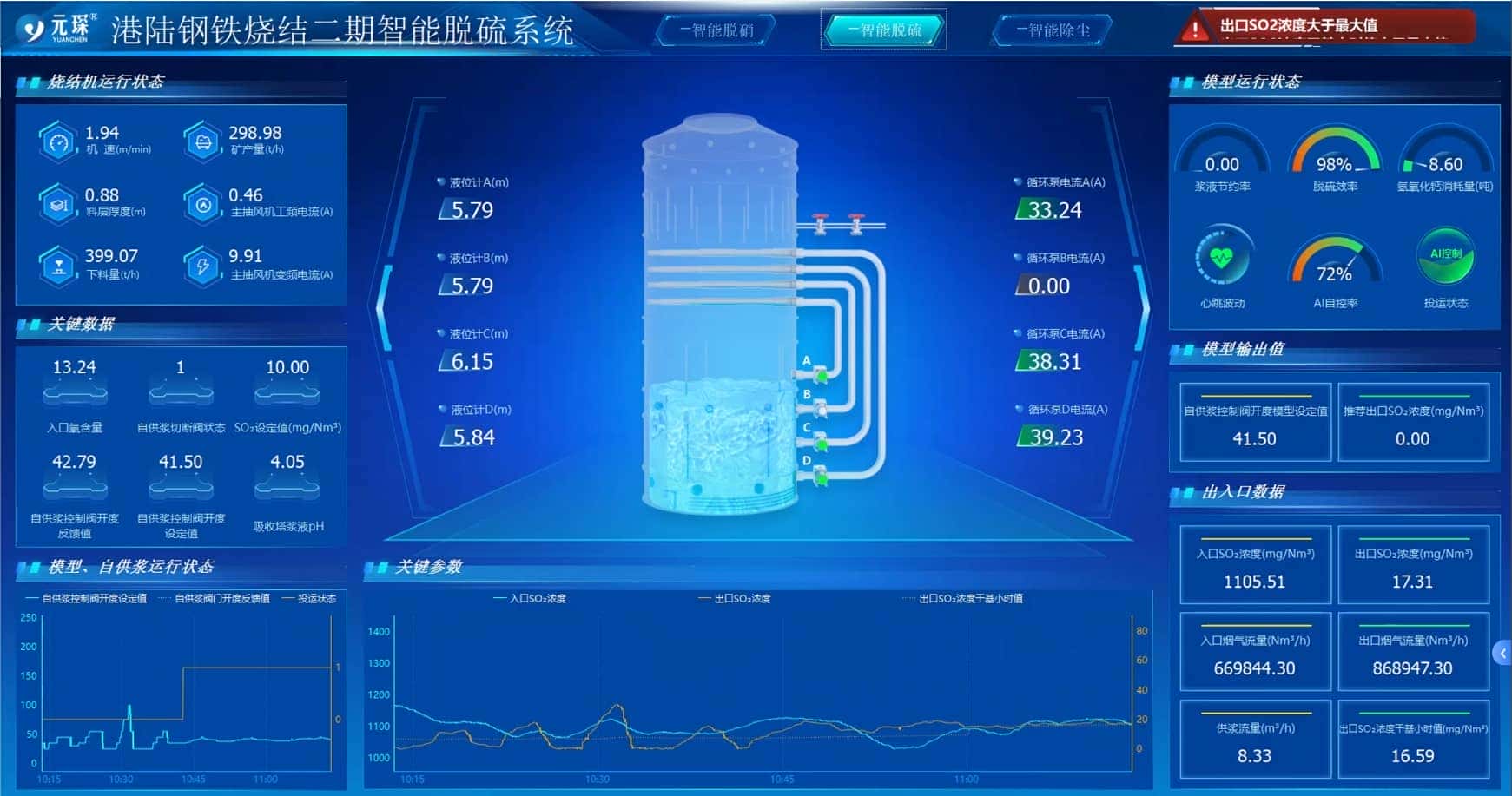
Intelligent Desulfurization System
Traditional flue gas desulfurization often fails to achieve automatic control due to high system inertia, frequent disturbances, and single-mode control, resulting in large SO₂ concentration fluctuations at the outlet or even exceedances, as well as high energy and reagent consumption.
Intelligent desulfurization comprehensively optimizes factors such as pH and multi-loop pump energy input, combined with SO₃²⁻ concentration forecasting, to establish a mechanism- and data-driven multi-layer predictive-control system, enabling smart FGD.
Pump energy
Reduced by 20%–30%
Fan power
Reduced by 30%–50%
Spray layer resistance
Reduced by 50%–80%
Limestone consumption
Reduced by 1%–6%
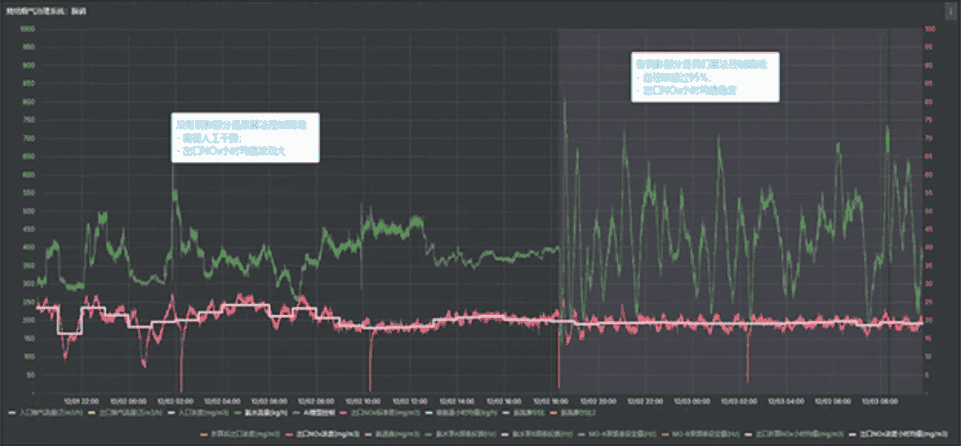
Intelligent DeNOx —— Case Study
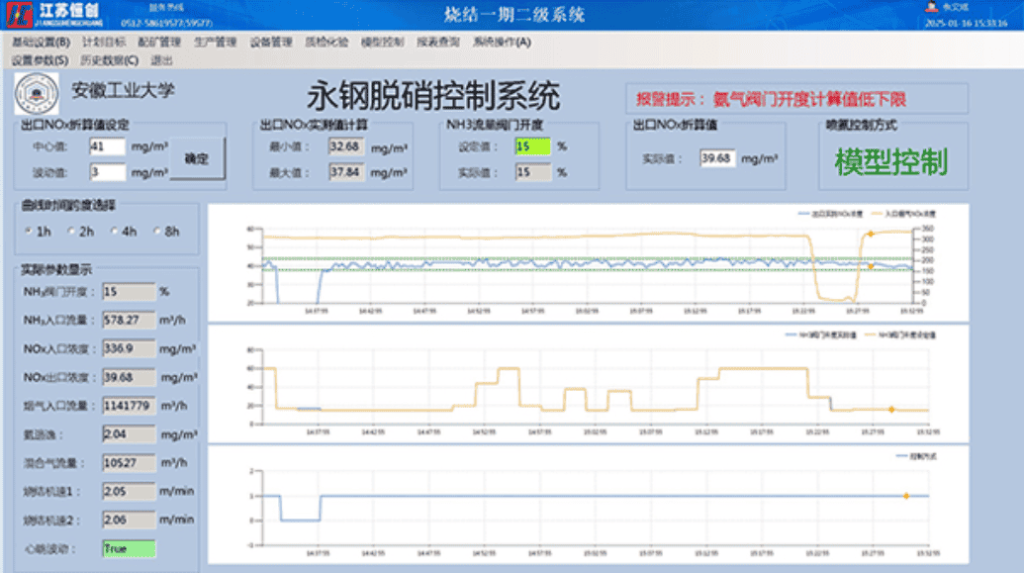
Smart Ammonia Injection – Jiangsu Yonggang
December 2023 – January 2024:
- Average inlet concentration: 251.69 mg/m³
- Average outlet concentration: 35.13 mg/m³
- Average ammonia flow: 215.60 m³/h
February 2024 – December 2024:
- Average inlet concentration: 238.24 mg/m³
- Average outlet concentration: 44.56 mg/m³
- Average ammonia flow: 195.62 m³/h
Average outlet NOx concentration Increased by 9.43 mg/m³
Ammonia flow
Reduced by 9.27%
NOx
Reduced by 5.34%
Ammonia Savings
3.92%
The annual economic benefit of reducing ammonia consumption and electricity consumption exceeds 2 million yuan.
Intelligent Denitrification Application Case – Ganglu Steel
Ganglu Phase II: flue gas volume 1.1 million m³/h, inlet NOx concentration 340 mg/Nm³, denitrification temperature 280 °C
Ganglu Phase II: the target is to control NOx below 20 mg/Nm³, with actual control at 19.5–19.7 mg/Nm³.
The average daily ammonia consumption is 9.66 tons, resulting in an annual consumption of 9.66 × 330 = 3,187.8 tons.
At a cost of 800 yuan per ton of ammonia:
- With a 3% saving, the annual ammonia savings = 3,187.8 × 10.94% = 105 tons
- Annual cost savings = 800 × 105 = 76,500 yuan