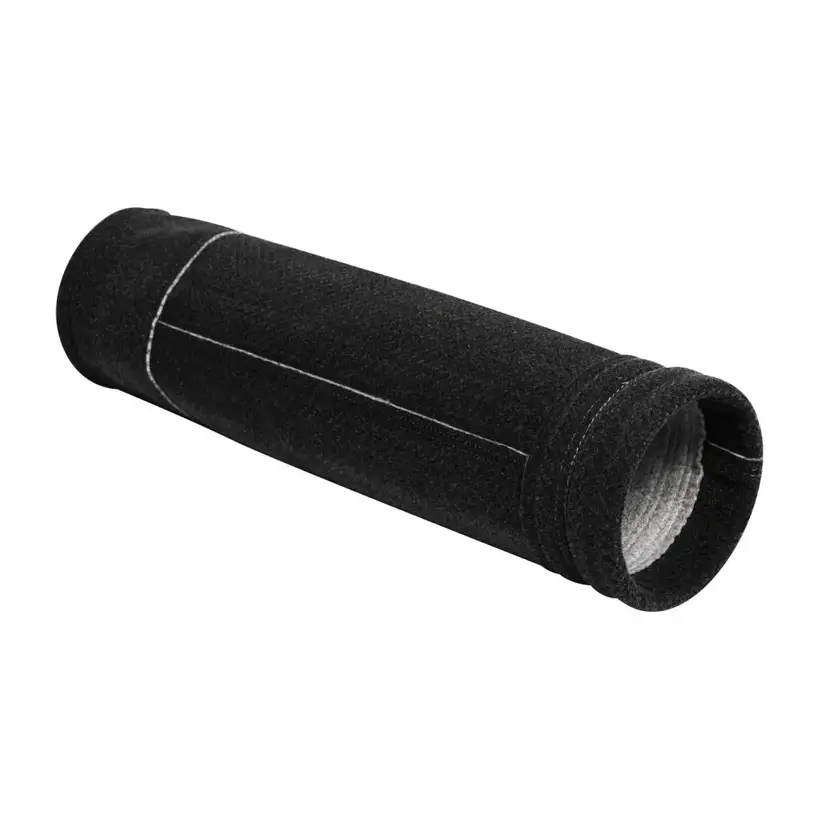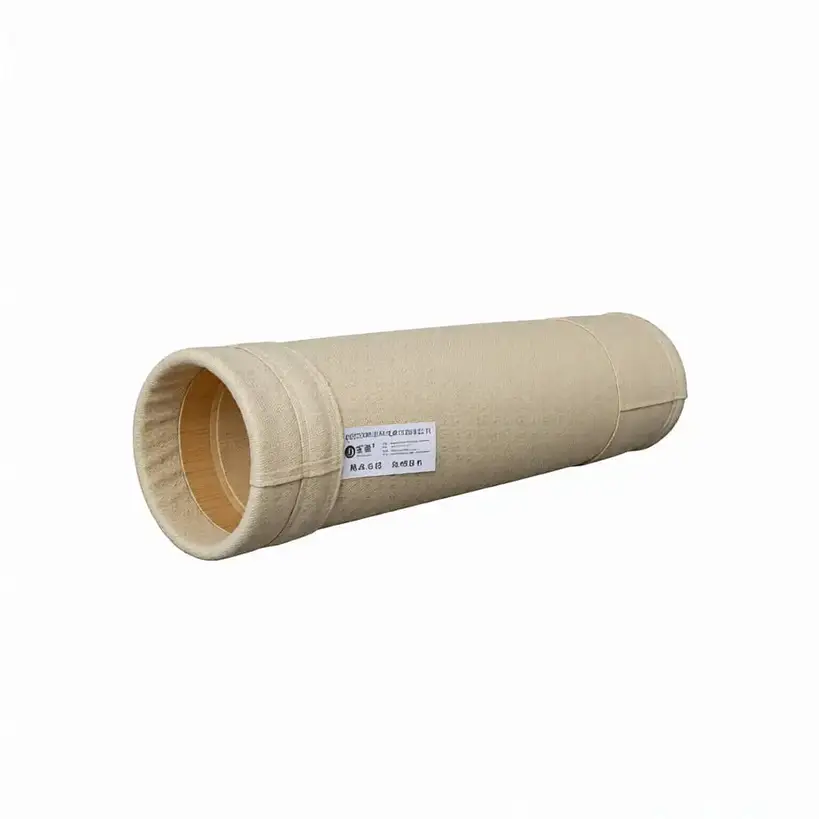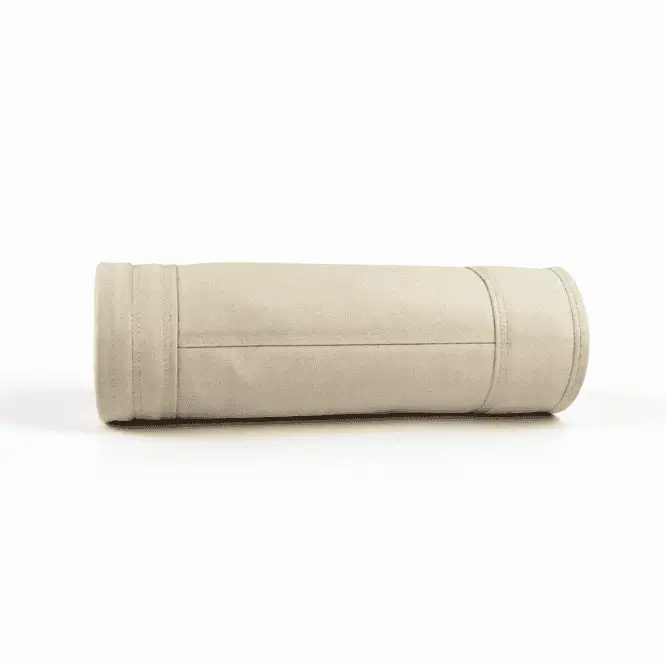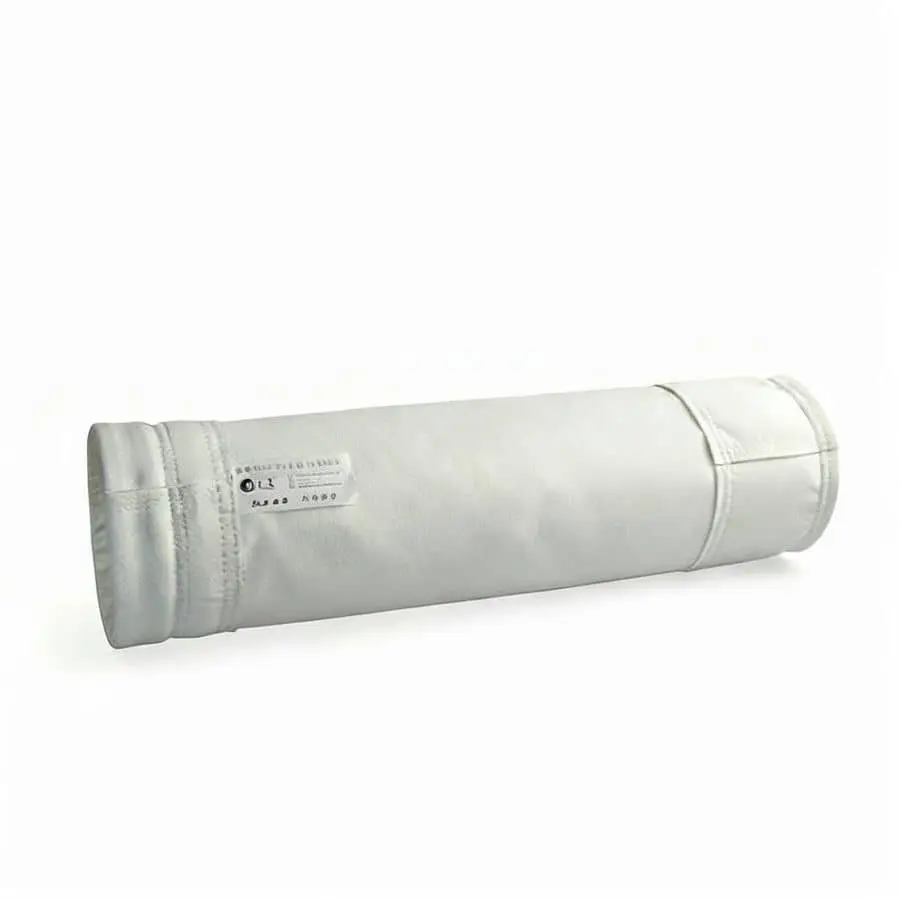
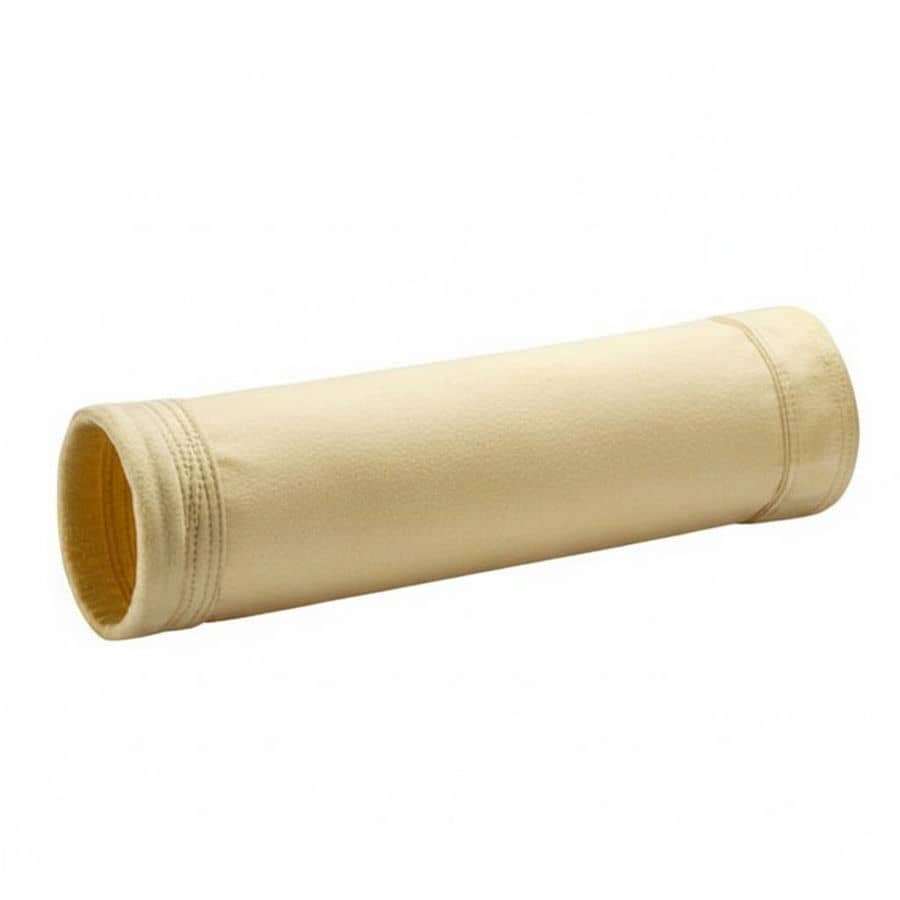
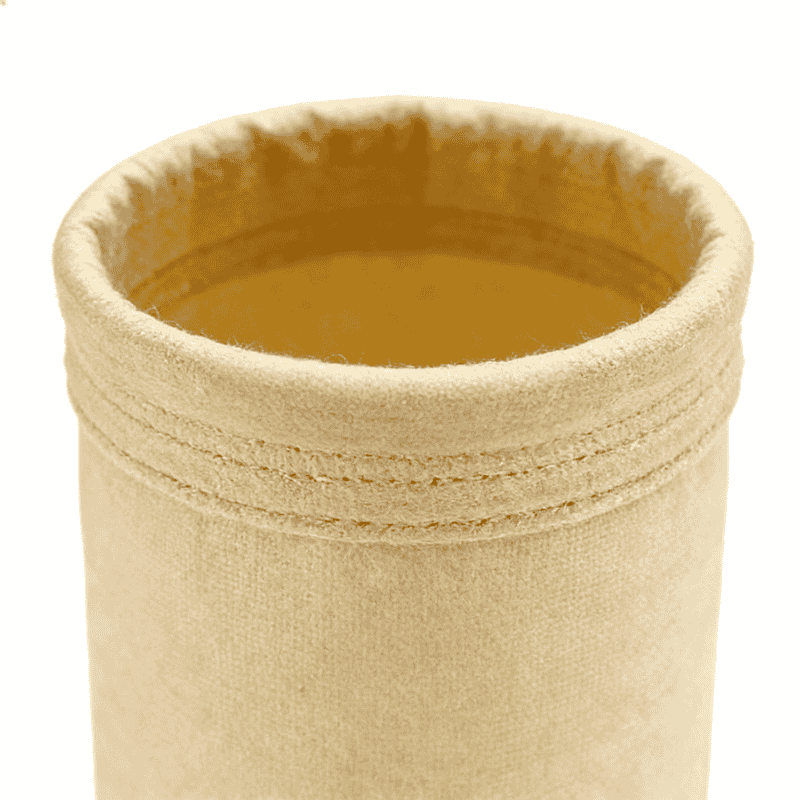
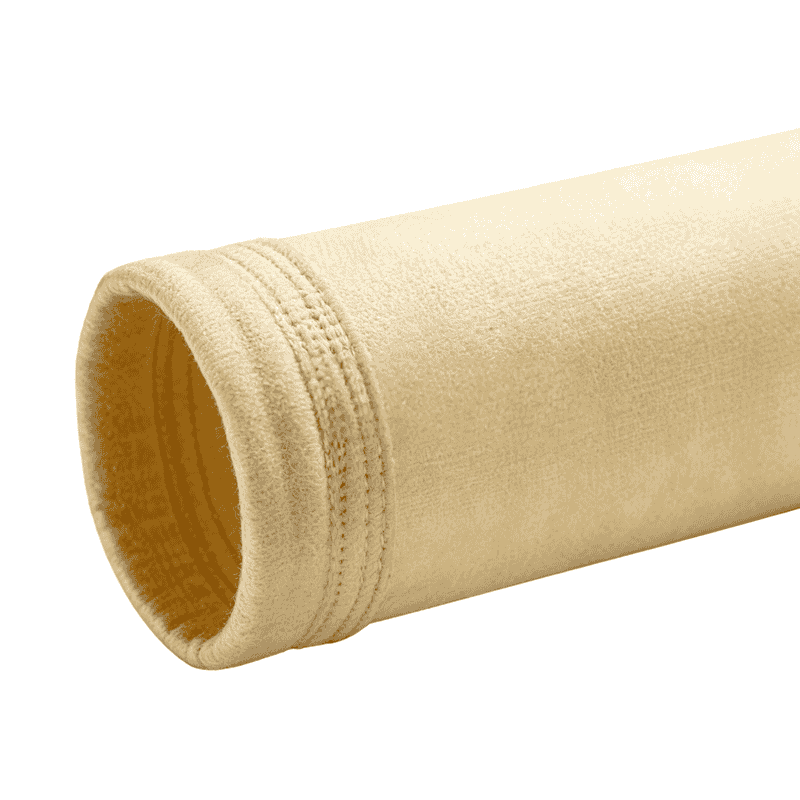
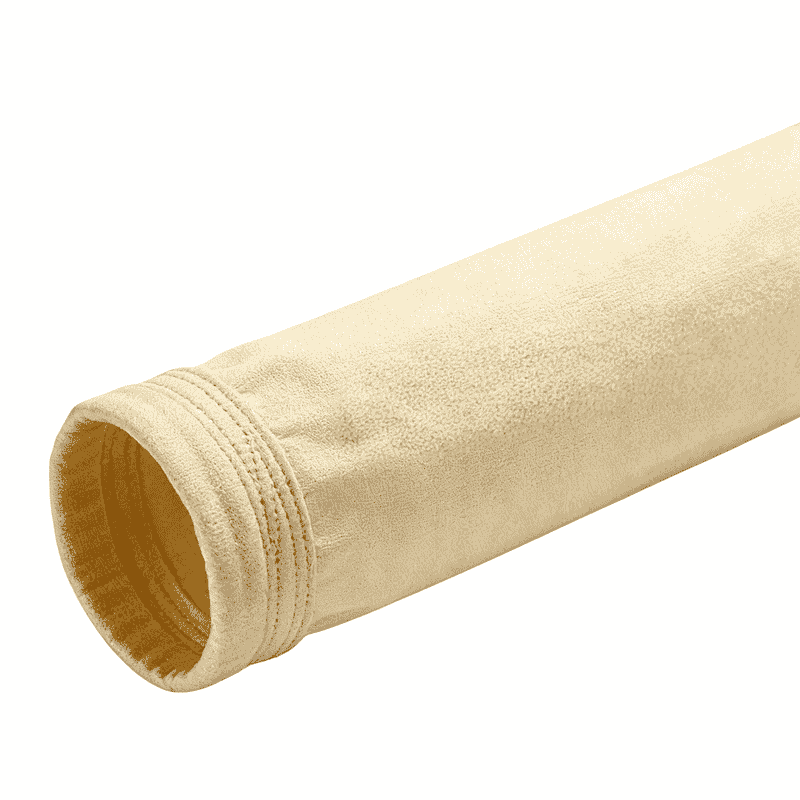
Fiberglass Filter Bags
| Fiber | Fiberglass |
| Gram Weight | 750g/m² |
| Continuous Operating Temp | 240℃ |
| Instant Operating Temp | 280℃ |
| Air Permeability | 0.8~1.5 m³/m²·min |
| Application Scenarios | High-temperature flue gas filtration in power plants, cement, steel and waste incineration industries. |
Product Description
Fiberglass filter bags are high-performance filtration products designed for industrial dust collection and flue gas filtration under high-temperature and harsh operating conditions. Fiberglass is an inorganic fiber primarily composed of silicon dioxide (SiO₂), produced by melting glass raw materials at temperatures between 1300–1600°C, drawing them into fine filaments, and rapidly quenching them. This process gives fiberglass excellent thermal and chemical stability.
Common fiberglass filter media include C-Glass (soda-lime silicate glass) and E-Glass (alkali-free alumino-borosilicate glass). Compared with organic fibers, fiberglass offers superior heat resistance, dimensional stability, and tensile strength. Except for hydrofluoric acid and strong alkalis at elevated temperatures, fiberglass exhibits excellent resistance to most chemical agents.
Key Features of Fiberglass Filter Bags
- Excellent High-Temperature Resistance: Capable of continuous operation at temperatures up to 260°C (500°F) or higher, depending on post-treatment and structural design.
- Outstanding Chemical Resistance:Highly resistant to acids, alkalis, and various corrosive gases.
- High Mechanical Strength: Durable and abrasion-resistant, with a typical service life exceeding 4,500 hours.
- High Filtration Efficiency: Effectively captures fine particulate matter, ensuring consistent and reliable filtration performance.
- Superior Dimensional Stability: Maintains shape and structural integrity even under high-temperature conditions, supporting long-term system stability.
Applications of Fiberglass Composite Filter Bags
Trusted by over 10,000 industrial users worldwide, fiberglass composite filter bags are widely applied in air pollution control and dust collection systems across industries such as:
- Steel and metallurgy
- Chemical processing
- Cement and building materials
- Ceramics manufacturing
- Coal-fired boilers
- High-temperature industrial exhaust systems