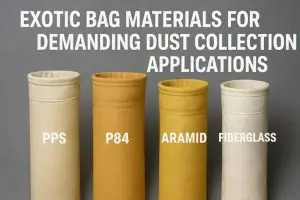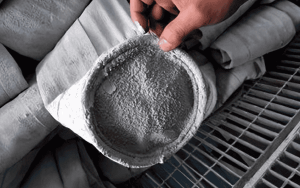
For many industrial flue gas treatment systems, Selective Catalytic Reduction (SCR) is the preferred technology for controlling NOx emissions. However, installing SCR catalysts directly in high-dust flue gas conditions—where particulate concentrations are intense—is comparable to exposing precision equipment to a continuous sandstorm.
Maintaining catalyst efficiency and durability in such environments is essential for long-term operational stability and compliance with increasingly strict emission regulations.
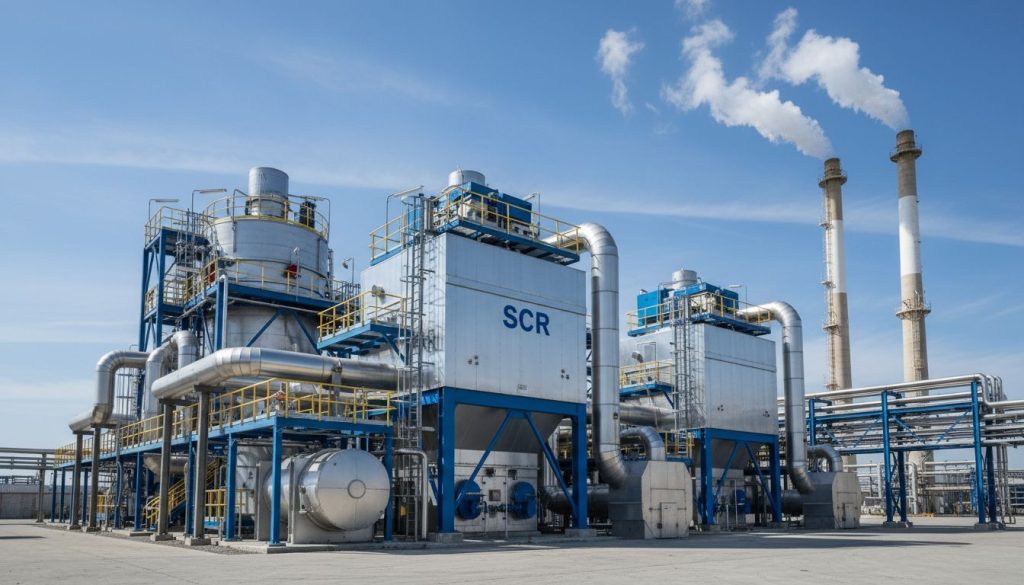
What Is High-Dust Flue Gas?
High-dust flue gas refers to untreated exhaust gas that contains a high concentration of particulate matter before dust removal equipment such as ESPs or bag filters. Typical components include:
- Fly ash generated during fuel combustion
- Unburned carbon particles
- Metal compounds, such as calcium, sodium, and potassium oxides
These conditions are common in coal-fired power plants, cement kilns, iron and steel sintering plants, and waste incineration systems, where SCR catalysts are exposed to raw, dust-laden flue gas.
The Three Major Challenges for SCR Catalysts in High-Dust Conditions
Plugging – The Primary Operational Risk
Dust particles tend to accumulate on the catalyst surface and within its pore structure, leading to:
-
Reduced active surface area
-
Increased pressure drop across the SCR reactor
-
Declining NOx conversion efficiency
In severe cases, prolonged ash buildup may result in partial or complete blockage of catalyst channels.
Poisoning – The Silent Cause of Deactivation
High-dust flue gas often carries chemically active species, including:
-
Alkali metals (potassium and sodium)
-
Alkaline earth metals (calcium)
-
Arsenic and sulfur compounds
These substances can react with catalytic active sites, causing chemical poisoning that is often irreversible and significantly shortens catalyst service life.
Abrasion – Continuous Mechanical Wear
Under high gas velocity, abrasive dust particles continuously scour the catalyst surface. Over time, this erosion can result in:
-
Thinning of catalyst walls
-
Structural damage or breakage
-
Increased generation of fine debris
Such mechanical degradation directly impacts catalyst performance and increases replacement frequency.
How SCR Catalysts Are Engineered for High-Dust Applications
Enhanced Catalyst Formulation
Catalysts designed for high-dust SCR systems typically feature:
-
Increased mechanical strength and abrasion resistance
-
Improved tolerance to alkali metals and sulfur compounds
-
Optimized pore structures that limit deep dust penetration
These design choices help balance catalytic activity with durability under harsh operating conditions.
Adapted Honeycomb Geometry
To reduce plugging risks while maintaining acceptable performance, high-dust SCR catalysts often adopt:
-
Larger channel openings to allow dust passage
-
Thicker cell walls to withstand erosion and mechanical stress
The goal is a practical balance between open flow area and structural robustness.
Operational and Maintenance Strategies That Matter
Selecting the right catalyst is only part of the solution. Effective operation and maintenance play an equally important role.
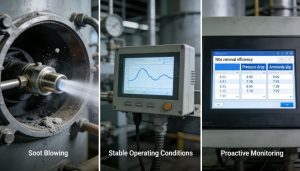
Controlled Soot Blowing
Regular and well-managed soot blowing is essential to remove ash deposits from catalyst surfaces. Optimizing blowing frequency and pressure helps achieve effective cleaning without causing mechanical damage.
Stable Operating Conditions
Maintaining steady flue gas temperature and uniform flow distribution reduces localized dust accumulation and thermal stress, allowing the catalyst to operate within its optimal reaction window.
Proactive Performance Monitoring
Key performance indicators such as NOx reduction efficiency, reactor pressure drop, and ammonia slip should be continuously monitored. Early detection of performance changes enables timely operational adjustments and extends catalyst service life.
Why High-Dust SCR Systems Remain Widely Used
Compared with low-dust or tail-end SCR configurations, high-dust SCR systems—typically installed between the economizer and air preheater—offer advantages such as:
-
Compact system layout
-
Easier retrofit for existing plants
-
Lower overall capital and operating costs
With purpose-built catalysts and disciplined operation, high-dust SCR systems can deliver stable NOx control while meeting tightening emission limits in regions such as the EU, China, and Southeast Asia.
Bottom Line
SCR catalyst performance under high-dust flue gas conditions depends on a combination of materials engineering, structural design, and operational discipline. When catalysts are properly engineered for dust-laden environments and supported by effective maintenance practices, high-dust SCR systems can achieve reliable, long-term NOx reduction with optimized lifecycle cost.
As environmental regulations continue to evolve worldwide, high-performance SCR catalysts designed for high-dust duty remain a proven and dependable solution for industrial NOx control.