In industrial dust collection systems, the term “bagging” (糊袋) describes a condition where filter bags lose their effectiveness due to accumulated dust that cannot be removed by standard cleaning methods. While there is no universally accepted definition in the industry, bagging is generally understood as:
The accumulation, adhesion, or caking of dust on the surface or within the filter media of a dust collector, especially under high humidity or in the presence of oily or sticky particulates, resulting in a significant increase in operational resistance and reduced filtration efficiency.
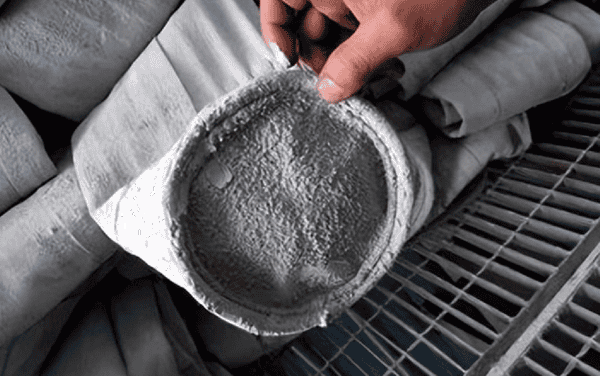
When bagging occurs, dust forms a dense layer over the filter surface, sharply reducing the effective filtration area and airflow through the media. This leads to:
-
Increased pressure drop across the dust collector
-
Higher energy consumption by induced draft fans
-
Frequent activation of cleaning systems, consuming more compressed air
-
Mechanical stress that can shorten filter bag lifespan
If unresolved, bagging may require complete replacement of filter bags, leading to higher operational costs.
Types of Bagging and Their Causes
Bagging can result from a combination of environmental, operational, and structural factors. It is generally classified into three categories: condensation-related, adhesive, and structural bagging.
1. Condensation-Related Bagging
Condensation bagging occurs when moisture in the flue gas interacts with dust and filter material. Key points include:
-
Operating temperature: Dust collectors should maintain a temperature at least 25 K above the acid dew point to prevent condensation.
-
Flue gas composition: High moisture or SO₃ content increases the dew point, making condensation more likely.
-
Pulse cleaning impact: Compressed air used for pulse cleaning is typically much cooler than flue gas. During pulses, the filter top can temporarily drop below the dew point, causing localized condensation.
-
Air leaks and wall effects: Leaks or poorly insulated walls can lower local temperatures, increasing the risk of condensation near peripheral bags.
In practice, condensation tends to occur more severely near the bottom of the bags or at the outer edges of the dust collector, where temperature variations are largest.
2. Adhesive Bagging
Adhesive bagging arises when dust particles stick to the filter surface and cannot be removed by online cleaning. Common causes include:
-
Sticky dust particles: Examples include oily particulates, ammonium sulfate from SCR systems, or lime-based byproducts from desulfurization processes.
-
Hygroscopic dust: Some dusts, like sugar powder, absorb moisture from the air, forming a thin liquid film on the filter fibers.
-
Crystallizing dust: Materials such as cement clinker or calcium sulfate can chemically crystallize on the filter surface, creating a hard layer.
-
Fine, high-moisture dust: Even dusts without strong inherent adhesion can form a persistent layer (“floating dust”) that thickens over time, especially on long filter bags exceeding 6 meters.
These phenomena can cause rapid increases in pressure drop, forcing line shutdowns if not addressed.
3. Structural Bagging
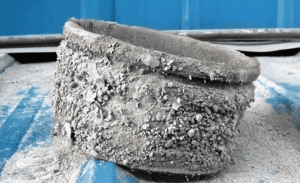
Structural bagging results from filter design, material characteristics, or operational issues:
-
Filter media structure: Low needle density or untreated fibers allow dust to penetrate deeper, leading to internal caking.
-
Surface treatment: Lack of brushing, singeing, or PTFE coating can leave fiber ends exposed, creating condensation nuclei or adhesion points.
-
Filter-fit issues: Pulse cleaning relies on filter deformation and contact with cage frames. Improper bag dimensions, excessive shrinkage, or binding with cages reduces cleaning effectiveness, leading to dust accumulation.
Structural bagging is particularly prevalent in high-humidity or chemically aggressive environments and can shorten filter service life if not addressed.
Key Takeaways for Prevention
To minimize bagging risks, industrial operators should focus on:
-
Controlling operating temperature: Maintain temperatures above the acid dew point and monitor flue gas moisture and SO₃ levels.
-
Optimizing filter media: Use treated, dense, or hydrophobic materials that resist adhesion and condensation.
-
Ensuring proper bag installation: Verify correct dimensions and clearances to maximize cleaning efficiency.
-
Maintaining pulse cleaning systems: Adjust pressure, duration, and frequency to prevent localized condensation or incomplete dust removal.
-
Monitoring system leaks and insulation: Minimize airflow variations and temperature drops that promote condensation.
By understanding the mechanisms behind condensation, adhesive, and structural bagging, operators can extend filter life, maintain airflow, and reduce energy consumption, while avoiding costly downtime.