In industrial air filtration, the dust collector filter bag is the heart of the system. However, even the highest-quality bags have a finite lifespan. For plant managers and maintenance engineers, recognizing early warning signs of filter failure is essential to prevent costly downtime, avoid environmental fines, and optimize energy consumption.
1. Sustained High Differential Pressure (DP)
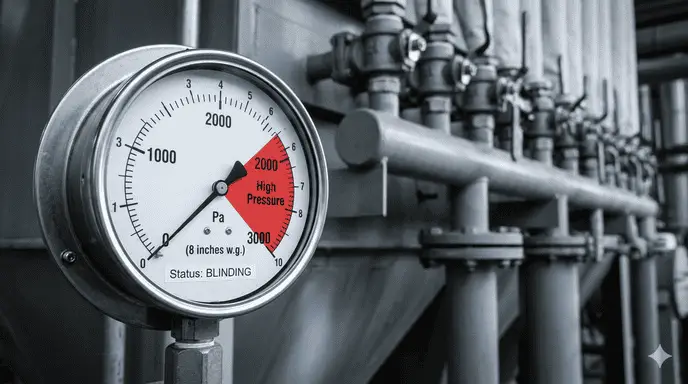
One of the most objective signs of filter fatigue is a consistently high pressure drop across the baghouse. If your DP gauge remains above 1500 – 2000 Pa (6-8 inches w.g.) even after multiple pulse-jet cleaning cycles, it indicates “blinding.”
- The Technical Cause: Dust particles have become deeply embedded within the fabric pores (depth loading) rather than staying on the surface.
- The Impact: Your ID fan must work harder to pull air through the clogged media, leading to a massive spike in energy costs and reduced motor life.
2. Visible Emissions from the Stack
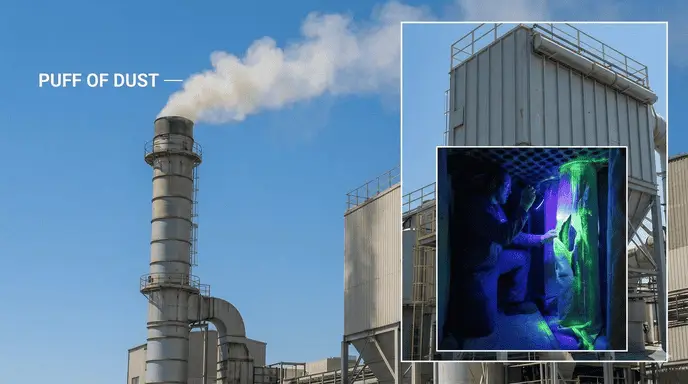
A healthy dust collector should show no visible smoke or dust. If you notice a “puff” of dust during a cleaning pulse or a continuous haze from the exhaust stack, your filter bags are likely compromised.
- The Technical Cause: Usually due to small holes, torn seams, or an improper seal at the snap-band or tube sheet.
- Pro-Tip: We recommend periodic fluorescent leak detection tests using specialized leak powder to pinpoint the exact location of failing bags before a total system shutdown is required.
3. Changes in Airflow and Suction Power
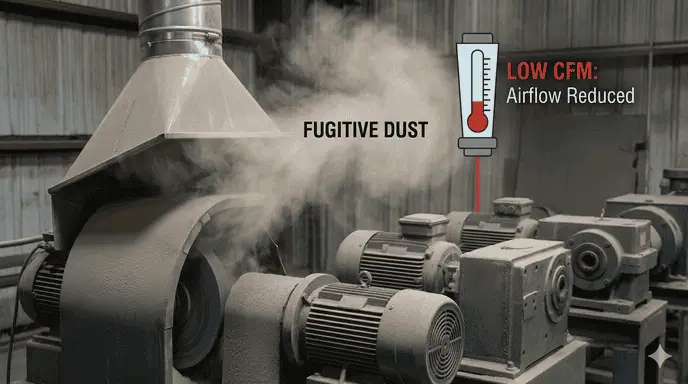
If dust is no longer effectively captured at the source—such as a furnace, grinding station, or kiln—the culprit is often the filter media.
- The Technical Cause: High resistance in the bags reduces the overall CFM (Cubic Feet per Minute) of the system.
- The Impact: This creates a hazardous working environment and allows fugitive dust to settle on expensive plant machinery, increasing secondary maintenance costs.
4. Frequent Pulse-Jet Cleaning Cycles
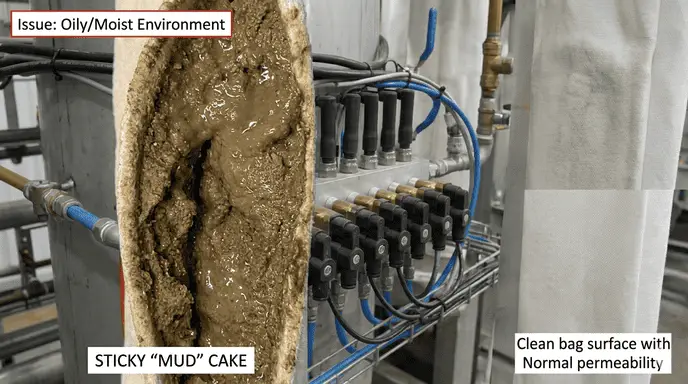
Is your system pulsing every few seconds? If the cleaning frequency has increased significantly to maintain operational DP, the bags have lost their permeability.
- The Technical Cause: The fabric has lost its “recovery” ability. This is common in high-moisture or oily environments where dust turns into a sticky “mud” on the surface.
- The Impact: Excessive pulsing accelerates mechanical wear (flex-fatigue) on the bags and consumes a vast amount of compressed air.
5. Physical Degradation and Chemical Attack
Environmental conditions inside the baghouse can chemically or thermally alter the filter media.
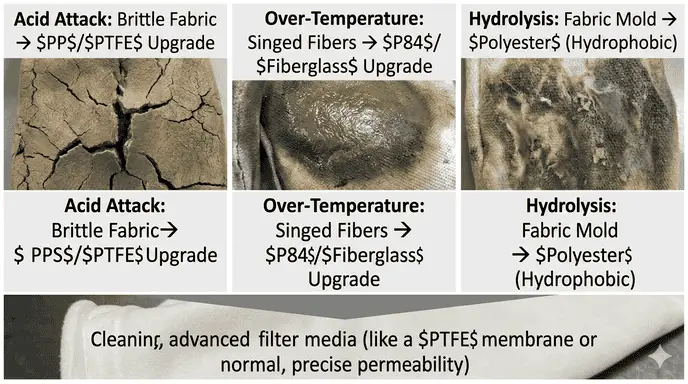
Material Performance Comparison Table
| Sign of Damage | Likely Cause | Recommended Material Upgrade |
|---|---|---|
| Brittle/Crispy Fabric | Acid or Alkali Attack | PPS or PTFE Membrane |
| Singed/Hardened Surface | Temperature Excursions | P84 or Fiberglass |
| Molding/Hydrolysis | High Moisture + Heat | Polyester (with Water-Repellent treatment) |
Warning: If your gas temperatures exceed 260°C, standard Nomex or Polyester bags will suffer irreversible thermal shrinkage, leading to bag tension failure.
Why Timely Replacement is a High-ROI Investment
Replacing filter bags is not just a maintenance cost—it is a strategic move for your bottom line:
- Regulatory Compliance: Ensure emissions stay below < 5mg/Nm³ to meet stringent environmental standards and avoid heavy fines.
- Energy Efficiency: Lowering the average DP by just 250 Pa can result in significant annual savings on fan electricity consumption.
- Safety & Longevity: Reducing fugitive dust prevents combustible dust hazards and extends the life of downstream equipment.
Partner with a Filtration Specialist
Choosing the right replacement bag is as critical as knowing when to change it. At YuanChen, we provide customized filtration solutions—ranging from PTFE membrane technology for fine dust to Nomex and PPS media for high-temperature applications—engineered to maximize service life and filtration efficiency.