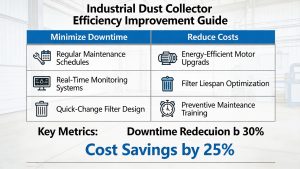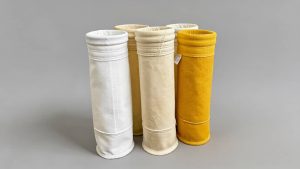
Industrial dust collection systems are facing increasing pressure to meet stricter emission standards while maintaining stable and cost-efficient operation. In this context, PTFE coated filter bags (also known as PTFE membrane filter bags) have become a preferred solution for high-performance filtration in demanding environments.
Unlike conventional filter media, PTFE-coated bags provide superior surface filtration, ensuring both high efficiency and long-term operational stability.
What Are PTFE Coated Filter Bags?
PTFE coated filter bags are typically made by laminating a microporous PTFE (polytetrafluoroethylene) membrane onto a base fabric such as polyester, aramid, or fiberglass.
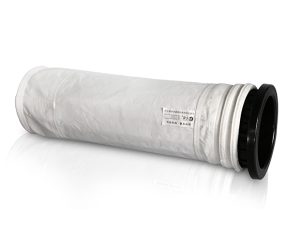
This membrane forms an ultra-fine filtration layer on the surface, allowing air to pass through while effectively capturing even the smallest dust particles.
The result is a surface filtration mechanism, rather than deep filtration, which significantly improves cleaning performance and reduces clogging.
Key Advantages of PTFE Membrane Filter Bags
1. High Filtration Efficiency (Near-Zero Emissions)
The PTFE membrane features extremely fine pores, enabling the capture of submicron particles. This allows emission levels to meet ultra-low standards required in industries such as power generation and waste incineration.
2. Low Pressure Drop and Energy Savings
Because dust is captured on the surface rather than penetrating the fabric, filter bags are easier to clean. This reduces pressure drop and lowers energy consumption of the dust collection system.
3. Excellent Chemical Resistance
PTFE is highly resistant to acids, alkalis, and corrosive gases. This makes it suitable for harsh flue gas conditions, including those containing SO₂ and other aggressive compounds.
4. Longer Service Life
By preventing dust penetration and fiber damage, PTFE coating extends the lifespan of filter bags and reduces replacement frequency.
PTFE Coated vs Conventional Filter Bags
Traditional filter bags rely on depth filtration, where dust particles accumulate within the fabric. Over time, this leads to clogging, higher pressure drop, and reduced efficiency.
In contrast, PTFE membrane filter bags operate via surface filtration:
- Dust remains on the surface
- Cleaning is more effective
- System runs more stable over time
This difference is critical for industries requiring consistent emission control.
Typical Applications
PTFE coated filter bags are widely used in industries with strict environmental requirements and complex working conditions:
- Power plants (coal-fired boilers)
- Waste incineration facilities
- Cement production lines
- Steel and metallurgical industries
- Chemical processing plants
These environments often involve high temperatures, corrosive gases, and fine particulate matter—conditions where standard filter media may fail.
How to Choose the Right PTFE Filter Bag
Selecting the correct PTFE membrane filter bag depends on several key factors:
- Operating temperature (e.g., polyester vs aramid vs fiberglass base)
- Dust characteristics (particle size, abrasiveness)
- Gas composition (presence of acid gases, moisture)
- Cleaning method (pulse jet, reverse air)
A properly selected configuration ensures optimal filtration performance and cost efficiency.
Conclusion
PTFE coated filter bags offer a significant upgrade over conventional filtration media, especially in applications where emission limits, system stability, and maintenance costs are critical.
By combining high filtration efficiency, low pressure drop, and strong chemical resistance, they provide a reliable solution for modern industrial dust collection systems.
For industries aiming to achieve long-term compliance and operational efficiency, PTFE membrane filter bags are not just an option—they are a strategic investment.