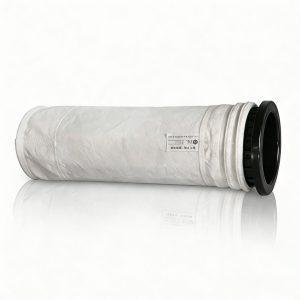
Industrial filter bags are the core component of dust collection systems, widely used in power plants, cement kilns, steel mills, and chemical processing industries. Their performance directly impacts emission compliance, system efficiency, and operating costs. However, premature failure of filter bags remains a common and costly issue.
Understanding the root causes is essential for improving system reliability and reducing maintenance frequency.
1. Improper Filter Media Selection
Choosing the wrong filter media is one of the leading causes of early failure.

Each material—such as Nomex (Aramid), P84, PPS, or PTFE—has specific limitations in terms of temperature resistance, chemical compatibility, and mechanical strength.
Common mistakes include:
- Using low-temperature fabrics in high-temperature environments
- Ignoring acid dew point conditions (leading to chemical attack)
- Selecting materials without considering gas composition (SO₂, NOx, moisture)
Impact:
- Rapid degradation of fibers
- Loss of filtration efficiency
- Reduced bag lifespan
👉 Key insight: Filter media must match actual operating conditions, not just design specifications.
2. Excessive Operating Temperature
Temperature excursions—especially short-term spikes—can severely damage filter bags.
Typical causes:
- Boiler startup/shutdown fluctuations
- Poor temperature control systems
- Unexpected process upsets
Consequences:
- Fiber embrittlement
- Shrinkage or deformation
- Permanent structural damage
👉 Even brief exposure beyond the material limit can drastically shorten service life.
3. Chemical Corrosion
Chemical attack is often underestimated but highly destructive.
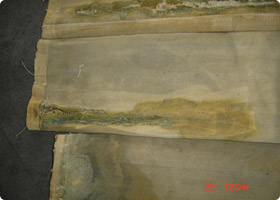
Key factors:
- Acid gases (SO₂, SO₃)
- Moisture + low temperature → acid condensation
- Alkaline or oxidizing environments
Typical issues:
- Fiber weakening
- Pinholes and tears
- Sudden bag failure
👉 Acid dew point control is critical in flue gas systems
4. Mechanical Damage
Physical damage is one of the most visible failure modes.
Causes include:
- Poorly manufactured or corroded cages
- Sharp edges or misalignment
- Improper installation
- High dust loading causing abrasion
Results:
- Tears and holes
- Uneven wear patterns
- Immediate loss of filtration performance
👉 Even a high-quality filter bag will fail quickly if the cage or installation is poor.
5. Improper Cleaning System (Pulse Jet Issues)
The pulse jet cleaning system must be carefully calibrated.
Common problems:
- Excessive cleaning pressure
- Too frequent pulse cycles
- Misaligned blowpipes
Effects:
- Fiber fatigue
- Bag stretching or rupture
- Reduced dust cake stability
👉 Over-cleaning is just as harmful as under-cleaning.
6. High Dust Load and Abrasion
In industries like cement and steel, dust characteristics play a major role.
Risk factors:
- Large, sharp particles
- High inlet velocity
- Poor airflow distribution
Outcome:
- Accelerated surface wear
- Reduced mechanical strength
- Frequent replacement cycles
👉 System design (e.g., baffles, airflow control) is just as important as material selection.
7. Poor Installation and Maintenance
Even the best filter bags can fail prematurely if installed incorrectly.
Typical issues:
- Improper sealing (leading to dust bypass)
- Twisted or improperly seated bags
- Lack of routine inspection
Consequences:
- Air leakage
- Uneven dust loading
- Localized damage
👉 Maintenance discipline is critical for long-term performance.
Premature failure of industrial filter bags is rarely caused by a single factor. In most cases, it results from a combination of material mismatch, process conditions, and operational issues.
To maximize filter bag lifespan:
- Select the correct filter media based on real conditions
- Maintain stable operating temperatures
- Control chemical exposure and dew point
- Optimize cleaning system parameters
- Ensure proper installation and regular inspection
A well-optimized baghouse system can extend filter bag life from 1 year to 3–5 years, significantly reducing total operating costs.
If you’re seeing frequent failures, don’t just replace the bags—analyze the system holistically.