
CHEMICAL INDUSTRY EMISSION CONTROL
Integrated Filtration and Denitration Solutions for Chemical Plants
Control particulate emissions, reduce NOx and support solid-liquid separation with coordinated filter bags, SCR catalysts and industrial filter cloth selected around the real process conditions.
Request a Process Review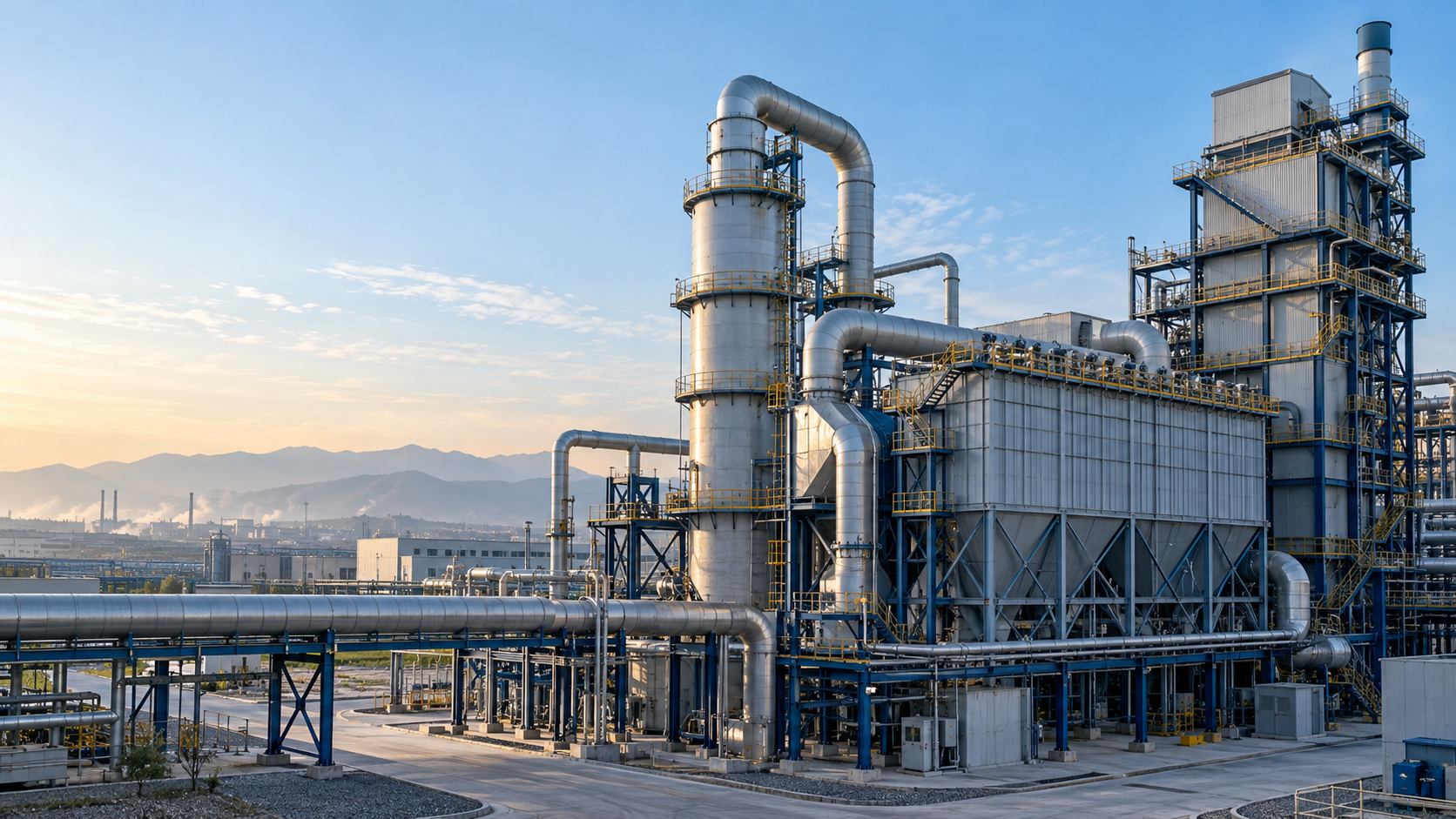
INDUSTRY OVERVIEW
Chemical plants need more than one filtration technology
Dust collection, flue-gas denitration and process filtration solve different objectives. A reliable solution starts by identifying the stream, pollutant target and operating window before choosing filter bags, SCR catalysts, filter cloth or a coordinated combination.
What plant teams need to know first
01 - Identify the process source
Reaction, drying, milling, transfer or packaging
02 - Define the exposure
Temperature, moisture, vapors and concentration
03 - Assess dust behaviour
Fine, abrasive, sticky, hygroscopic or combustible
04 - Validate material compatibility
Fibre, scrim, finish, seams and system controls
COMPLETE SOLUTION SCOPE
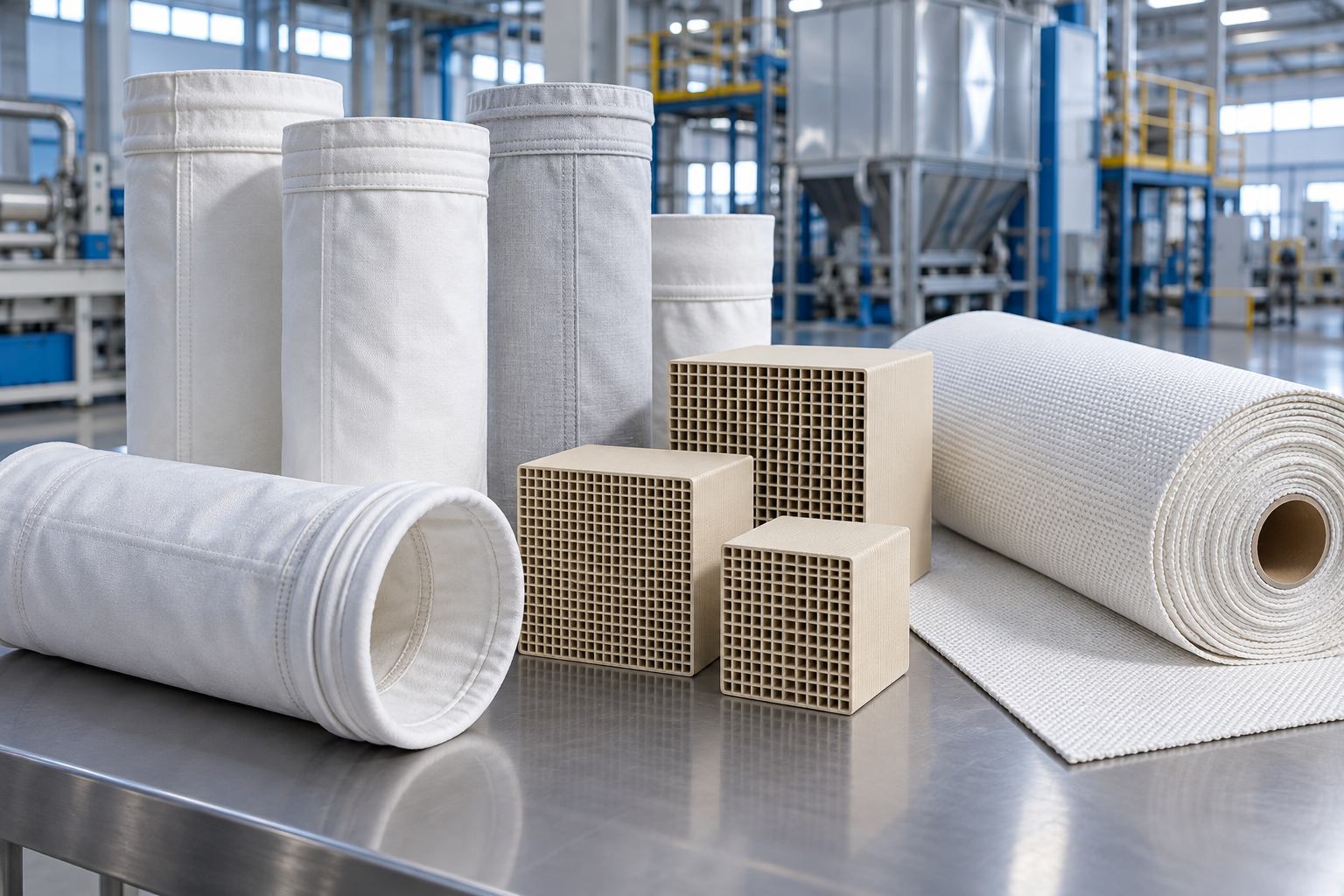
Three product families across chemical process and emission control
Dust collection, NOx reduction and solid-liquid separation solve different problems. We identify the stream and treatment objective, then match the correct product family to its operating conditions.
PARTICULATE CONTROL
Dust collector filter bags
For baghouse particulate capture under chemical, thermal and mechanical exposure.
Explore productsNOX REDUCTION
SCR denitration catalysts
For selective catalytic reduction matched to gas temperature, composition, dust and NOx targets.
Explore productsPROCESS FILTRATION
Industrial filter cloth
For solid-liquid separation matched to slurry chemistry, particle retention, permeability and cake release.
Explore productsPROCESS SOURCES
Different operations create different dust and gas combinations
Drying and calcination
Review temperature profile, vapors, moisture changes and fine particulate.
Milling and blending
Assess particle size, abrasion, dust loading and cleaning demand.
Reactor and product recovery
Define the chemical mixture, concentration, upset conditions and product sensitivity.
Transfer and packaging
Consider fine dust release, static control, housekeeping and repeated cycling.
RISK REVIEW
Diagnose the exposure before choosing media
A short bag life is not always a fibre problem. Check process changes, condensation, airflow distribution, cleaning settings, cage condition and installation evidence.
Corrosion and hydrolysis
Moisture and chemical species can interact with temperature to weaken unsuitable materials.
Sticky or hygroscopic dust
Moisture pickup and difficult release can blind the surface and increase pressure drop.
Fine emissions
Particle distribution, media structure, membrane choice and sealing all influence capture.
Combustible dust
Antistatic media is one part of a system-level hazard assessment, not a complete safety solution.
ENGINEERING DATA TABLES
Parameters that turn a product inquiry into an engineering proposal
Use the tables as a project-data checklist. Values must come from plant measurements, design documents or agreed test conditions; they are not universal product limits.
1. Operating data to provide
Application stream
Key parameters
Units / format
Engineering decision
Baghouse flue gas
Gas volume; normal and peak temperature; dust loading; moisture; O2; SOx / NOx
Nm3/h; °C; g/Nm3; %; mg/Nm3
Media and finish; air-to-cloth review; cleaning and pressure-drop risk
SCR inlet gas
Inlet / target NOx; temperature window; dust; SO2 / SO3; allowable ammonia slip
mg/Nm3; °C; g/Nm3; ppm; Pa
Catalyst formulation; geometry; activity window; pressure-loss allowance
Liquid-solid stream
pH and chemistry; temperature; particle size; solids content; cycle time
pH; °C; μm; %; min
Filter-cloth weave; yarn; permeability; particle retention and cake release
Existing equipment
Equipment drawing; dimensions; quantity; cleaning method; service and failure history
mm; sets; photos; trend data
Fit; sealing; installation; maintenance access and lifecycle comparison
2. Product specification checklist
Product family
Specification fields
Verify before approval
Useful project evidence
Filter bags
Fibre; scrim; basis weight; permeability; membrane / finish; diameter; length; cuff; bottom; seam
Continuous and peak temperature; chemistry; dust release; cage and tubesheet fit
Bag drawing; media datasheet; test report; used-bag and cage photos
SCR catalysts
Catalyst type; pitch / cell geometry; module dimensions; activity window; pressure loss
Gas composition; NOx target; dust; poisoning / masking risks; installation direction
Gas analysis; reactor drawing; performance target; operating trend
Industrial filter cloth
Fibre; yarn; weave; weight; thickness; air permeability; width and edge finish
Slurry chemistry; particle size; cake release; washing cycle; equipment tension
Cloth drawing; sample; filtration test; used-cloth failure photos
System interfaces
Flow distribution; sealing; grounding; cleaning; support structure; access
Integration responsibility; acceptance conditions; shutdown and maintenance plan
P&ID; equipment layout; inspection checklist; agreed acceptance record
Important: final performance values and guarantees should be defined against the agreed operating envelope and test method for the specific project.
MATERIAL COMPATIBILITY
Selection criteria by product family
The examples below are engineering starting points. Final selection must be checked against measured gas or slurry conditions, equipment design and required performance.
Filter bag system
Review media, scrim, membrane or finish, dimensions, cuff, bottom and seam against gas temperature, chemistry, dust and cleaning.
SCR catalyst system
Review catalyst geometry, formulation, activity window, pressure loss, dust loading and poisoning risks against the NOx target.
Filter cloth system
Review weave, permeability, particle retention, cake release, slurry chemistry, washing cycle and equipment fit.
System interfaces
Check ductwork, flow distribution, cleaning, sealing, grounding, access and maintenance because product performance depends on the surrounding system.
COMPLETE SPECIFICATION
Specifications that engineering and procurement can review
For repeatable results, define product materials, geometry, dimensions, performance criteria, inspection evidence and operating assumptions before production.
Media
Fibre, scrim, basis weight and permeability.
Surface
Membrane, finish and dust-release requirement.
Construction
Dimensions, cuff, bottom, seam and thread.
Verification
Drawing, tolerances, material evidence and inspection.
CHEMICAL PLANT FAQ
Technical questions before selecting filtration and denitration products
Can a compatibility chart make the final selection?
No. A chart is an initial screen. Mixtures, concentration, temperature, moisture, exposure time and mechanical conditions must be evaluated together.
When should a chemical plant evaluate SCR catalysts?
Evaluate SCR when NOx reduction is required and the gas temperature, composition, dust loading, poisoning risks and pressure-loss allowance support a catalytic treatment route.
What data is needed for an engineering proposal?
Provide the process source, pollutant target, gas or slurry composition, flow, temperature, moisture, equipment drawings, quantity and current performance problem.
Are antistatic bags enough for combustible dust?
No. Grounding, equipment design, operating procedures and the full hazard assessment must be handled by qualified plant safety personnel.
REQUEST A COMPATIBILITY REVIEW
Tell us the pollutant target and operating conditions
Share the gas or slurry conditions, equipment drawings and current performance issue. We will help identify whether the project needs filter bags, SCR catalysts, filter cloth or a coordinated solution.