
YUANCHEN / AI + INDUSTRIAL CONTROL
AI Smart Environmental Island
Stable emissions. Smarter operating costs.
AI optimization for DeNOx, dust collection and wet FGD. Improve emission stability, reagent use and energy demand around the equipment you already operate.
AI-generated engineering concept · Not a client-site photograph.
01
Intelligent DeNOx
NOx prediction, precise dosing and catalyst insight
02
Intelligent Dust Collection
ESP, fabric filtration and ash conveying
03
Intelligent FGD
Slurry, circulation pumps and oxidation air
01 / IS THIS RELEVANT TO YOUR PLANT?
What does your plant need to improve?
For plant owners, environmental managers and engineering teams looking to improve an existing flue-gas treatment system.
EMISSIONS
Fluctuations at the outlet
Delayed measurements and manual corrections can leave operators reacting after the disturbance.
REAGENTS
More dosing than the process needs
Conservative settings can increase ammonia, limestone or additive use without resolving the underlying imbalance.
ENERGY
Auxiliaries operating above demand
Fan, pump, electrical-field and compressed-air duty should follow actual process requirements.
MAINTENANCE
Hidden deterioration
Catalyst deactivation, deposits, filter leaks and equipment faults need earlier diagnosis and traceable action.
Applications include power generation, steel and metallurgy, industrial boilers and biomass plants. Define the treatment equipment and process conditions before selecting a module.
02 / FIVE DIMENSIONS OF VALUE
Five ways to improve plant performance.
Improve emission stability, reduce avoidable consumption and make day-to-day operation easier—with outcomes evaluated against your plant’s actual conditions.
01 / COMPLIANCE
More stable emissions.
Anticipate disturbances and coordinate control to support stable NOx, SO₂ and particulate performance.
Assess: outlet trends, fluctuations and ammonia slip.
02 / ECONOMICS
Lower operating costs.
Evaluate avoidable electricity, reagent and maintenance costs across the agreed system boundary.
Assess: annual net benefit and project-specific payback.
03 / MATERIALS
Less reagent waste.
Match ammonia, urea, slurry and additive demand more closely to process conditions.
Assess: normalized consumption and material utilization.
04 / OPERATIONS
Simpler daily operation.
Support operators with adaptive control, diagnosis and equipment-condition information.
Assess: manual interventions, control participation and maintenance.
05 / ENVIRONMENT
Measurable environmental value.
Connect verified energy and material reductions to a transparent environmental assessment.
Assess: energy saved and emissions calculated with applicable factors.
Results depend on the installed equipment, operating conditions and agreed scope. Project cases below show reported application-specific results.
03 / REFERENCE PROJECTS
Proven applications. Specific results.
Three applications illustrate where optimization has been used. Match the process and control scope—not only the plant size—to your own project.
01 / DUST COLLECTION
Shazhou Power · Unit 4
6.96%
reported reduction in electricity consumption
Operating priority
Adjust dust-collector operation to changing generation load and other operating conditions.
Implementation focus
Operating-condition-based dust control; the presentation reports 100% AI model deployment.
02 / DESULFURIZATION
Pingwei Power · Unit 6
7.93%
reported reduction in slurry consumption
Operating priority
Improve slurry supply and outlet-SO₂ stability as inlet conditions change.
Implementation focus
FGD optimization; the presentation reports outlet SO₂ fluctuation within ±3 mg/Nm³ and model operation above 99%.
03 / PRECISE AMMONIA DOSING
Ganglu Steel · Phase II
7.25%
reported reduction in ammonia consumption
Operating priority
Coordinate ammonia dosing with NOx demand and reduce outlet fluctuations.
Implementation focus
Precise ammonia injection; the presentation reports outlet NOx fluctuation within ±5 mg/Nm³ and model operation above 98%.
Reported results from YuanChen’s project presentation. The displayed figures describe different projects and metrics; comparison periods and original acceptance records are reviewed for a project-specific proposal.
How should you evaluate a similar project?
Review the equipment, inlet conditions, load range, baseline, metering boundary and evaluation period. Keep deployment rate, automatic-control participation and model operating rate as separate definitions.
04A / INTELLIGENT DENOX
Intelligent DeNOx.
For SCR systems with dosing instability, uneven distribution, high reagent use or ammonia-slip concerns. Select the functions that address the actual cause.
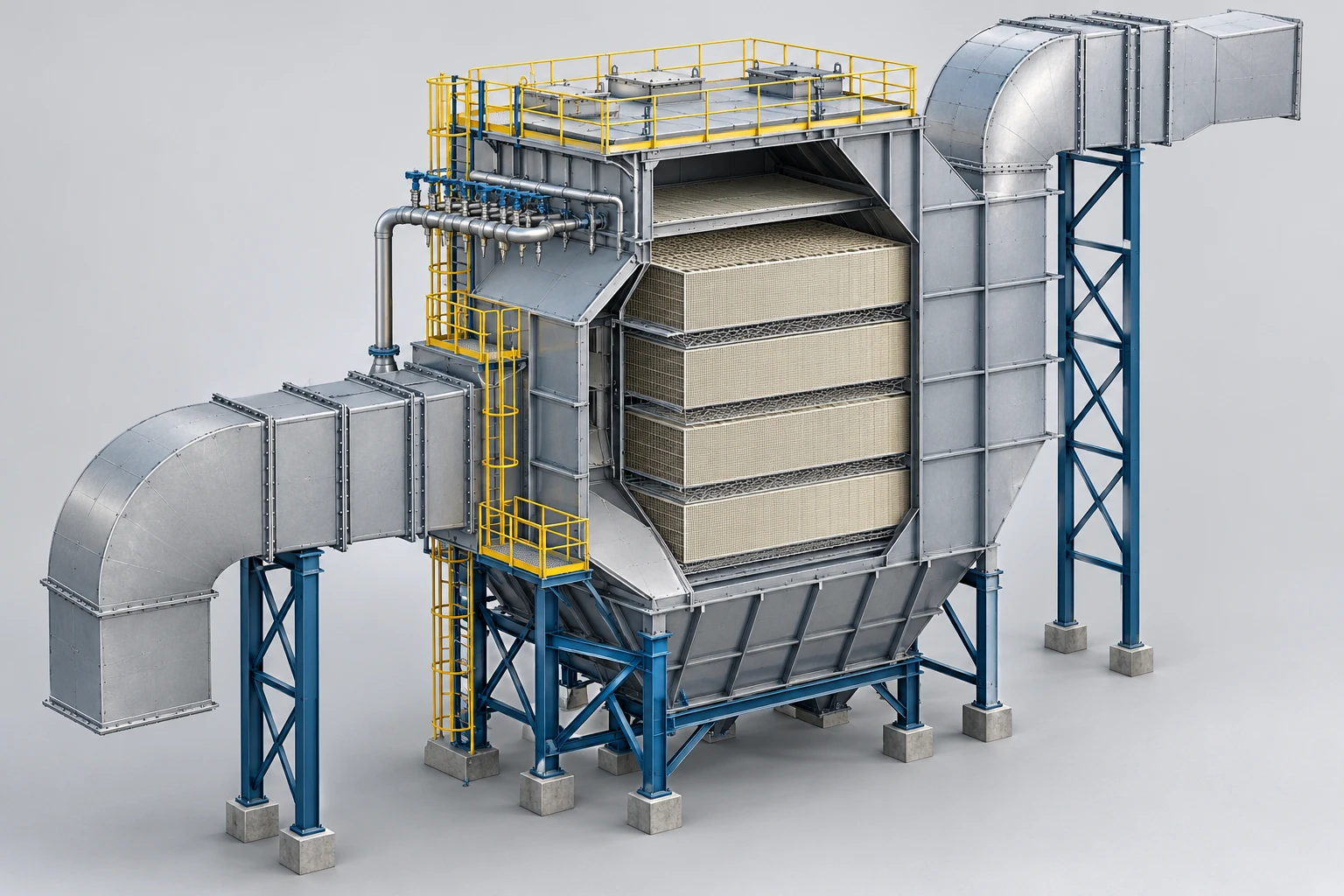
NOx prediction
Zonal dosing
Catalyst diagnosis
SCR equipment concept · AI-generated illustration. Layout and hardware depend on the installed system.
01 / Urea-to-ammonia optimization
Assess pyrolysis temperature control or hydrolysis concentration and temperature, according to the installed ammonia-production route. Coordinate reagent preparation with downstream demand.
02 / Precise ammonia injection
Use inlet NOx prediction, feedforward compensation and coordinated main/zonal valve control to address measurement delay and non-uniform demand.
03 / NOx prediction
Combine process mechanisms and operating data to anticipate disturbances and support earlier control action.
04 / Dilution-fan coordination
Match dilution-air demand and fan operation to load, equipment availability and the applicable dosing strategy.
05 / Air-preheater anti-clogging
Use pressure, temperature and gas-condition information to diagnose deposit risks and support an adaptive soot-blowing strategy.
06 / Full-load operating strategies
Coordinate emissions, reagent use and auxiliary demand across the approved operating envelope, including changing-load conditions.
07 / Catalyst activity diagnosis
Estimate catalyst condition from operating data, update model parameters and support decisions about cleaning, regeneration or replacement.
Engineering foundation: flow-field simulation → layout review → prediction and zonal control → operating feedback.
04B / INTELLIGENT DUST COLLECTION
Intelligent dust collection.
Select ESP, fabric-filter or ash-conveying functions according to the installed equipment and the operating issue.
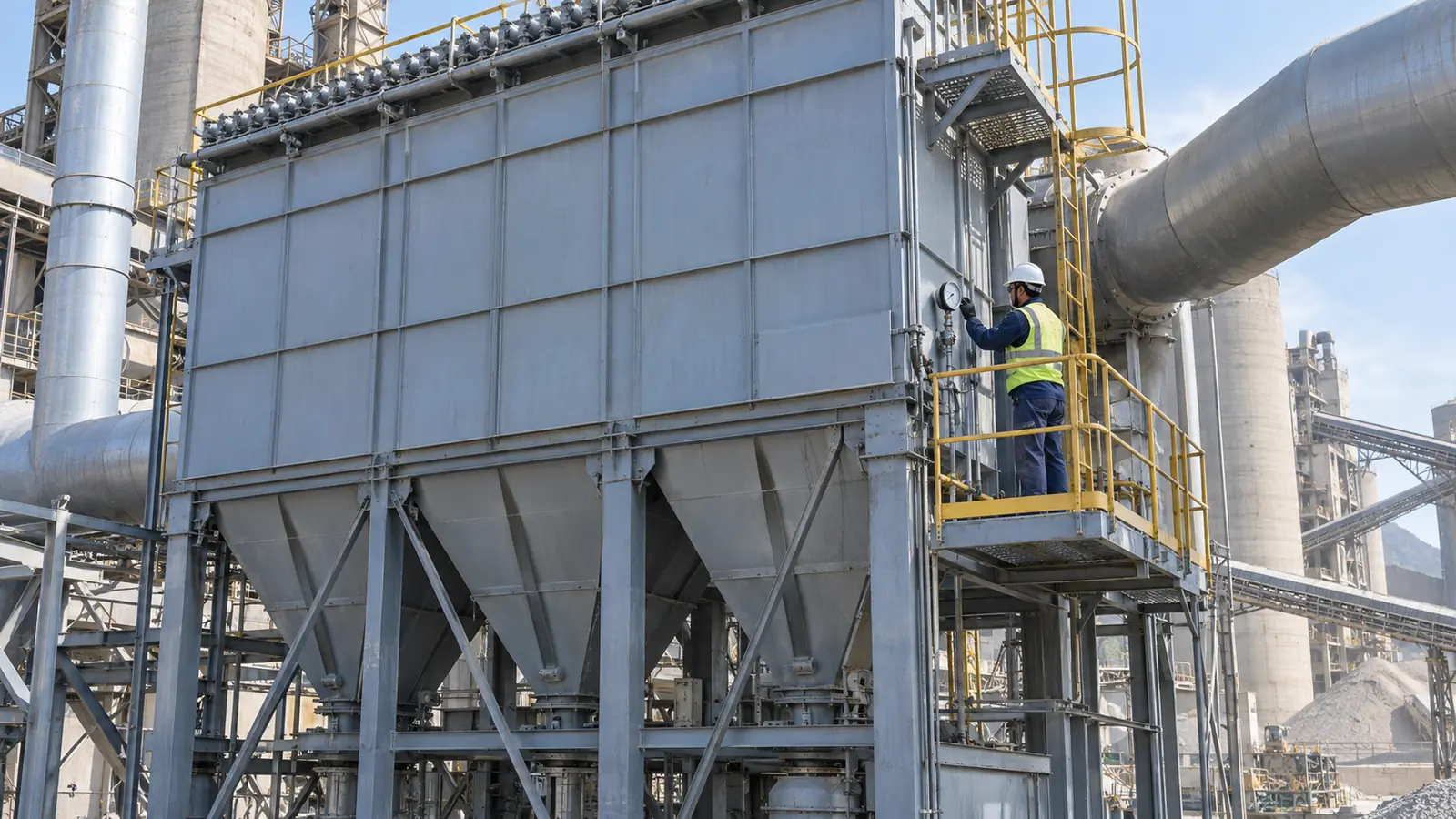
Define your collector pathway.
ESP, fabric filtration and ash conveying have different control variables. Select the pathway that matches the equipment at your plant.
Fabric-filter equipment concept · AI-generated illustration. ESP and ash-conveying systems use different hardware.
01 / ELECTROSTATIC
Smart ESP
Coordinate power supply, electric-field operating conditions and mechanical cleaning.
Power supply & field control
Review energization, voltage/current and load response against outlet particulate concentration.
Rapping & equipment health
Optimize rapping strategy and inspect condition trends, fault warnings and equipment lifecycle needs.
02 / FABRIC FILTER
Smart Baghouse
Coordinate compressed air, filtration and cleaning around actual differential-pressure conditions.
Adaptive pulse cleaning
Review pulse sequence, interval and pressure-drop response to avoid unnecessary cleaning duty.
Leak detection & lifecycle
Use suitable monitoring to identify abnormal filtration behaviour and support filter-bag maintenance and replacement decisions.
03 / ASH HANDLING
Smart Ash Conveying
Connect ash-volume prediction, dispatch and on-demand pneumatic conveying.
Predict & schedule
Forecast ash-volume changes and stagger conveying tasks across available equipment.
Optimize conveying air
Adjust conveying and fluidizing-air demand within the proven transport envelope to manage power use, wear and blockage risk.
04C / INTELLIGENT DESULFURIZATION
Intelligent desulfurization.
For wet-FGD applications with supply instability, unnecessary reagent demand or high pump and oxidation-air duty.
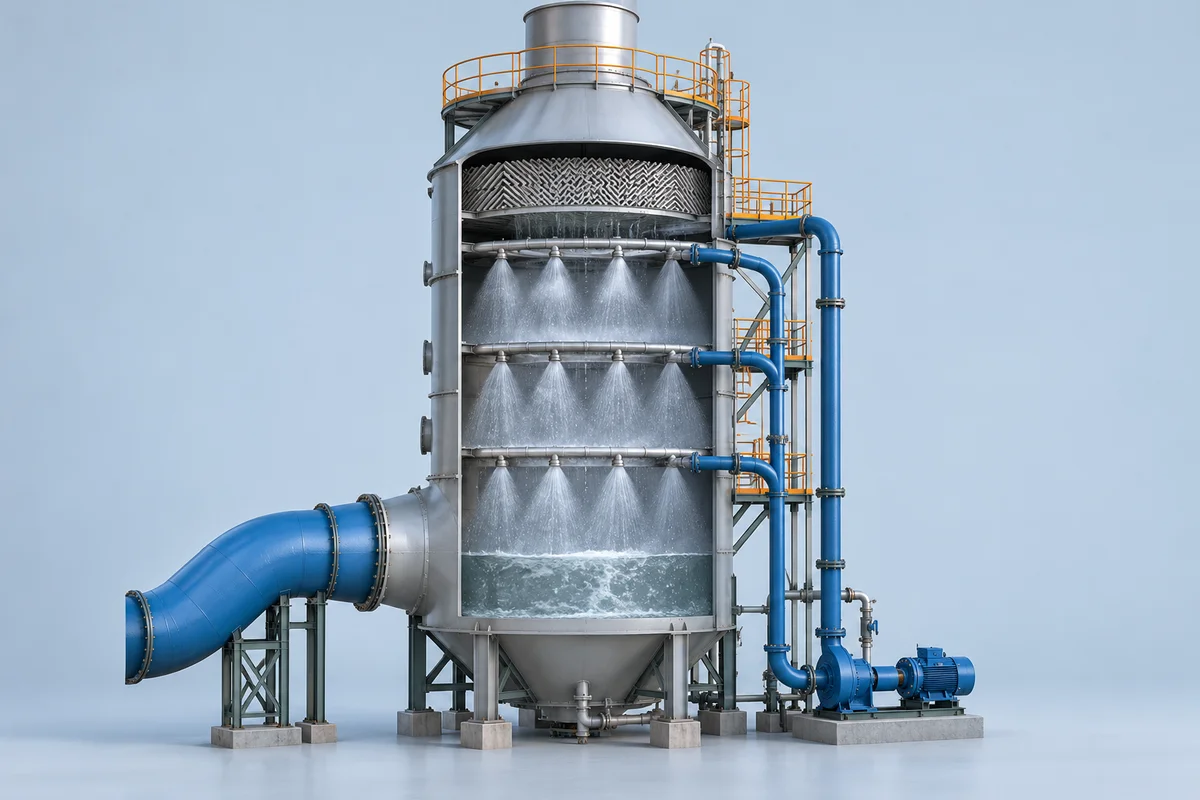
Wet-FGD equipment concept · AI-generated illustration. Process configuration is defined during engineering.
01 / Intelligent slurry preparation
Coordinate preparation, density and process demand. Distinguish limestone-slurry preparation from lime-slaking applications when defining the scope.
02 / Intelligent slurry supply
Combine inlet SO₂, gas flow, absorber pH and tank information to regulate supply and reduce unnecessary manual valve adjustments.
03 / Oxidation-air optimization
Match oxidation-air demand to sulfur loading and slurry conditions. Identify any fan or variable-speed retrofit separately.
04 / Slurry-state monitoring
Bring density, pH, solids content, oxidation condition and temperature into a connected monitoring and diagnostic view.
05 / Circulation-pump optimization
Coordinate fixed-speed pump combinations and variable-speed operation with absorber demand, start/stop constraints and protective operating limits.
06 / Adaptive additive dosing
Where additives are used, combine load and fuel information with desulfurization feedback to support a controlled dosing strategy.
05 / HOW THE SYSTEM WORKS
From plant signals to better decisions.
AI supports the engineering model: it learns changing operating patterns, predicts demand and helps select actions within defined constraints.
01
Sense
Collect trusted field and DCS signals.
02
Predict
Estimate trends and recognize the operating condition.
03
Decide
Optimize the permitted control variables.
04
Execute
Apply operator-approved or authorized automatic actions.
05
Learn
Evaluate outcomes and refine the model.
PROCESS MECHANISMS
Explain the plant
Flow, reaction, heat and mass-transfer relationships give the model physical context.
PREDICTIVE CONTROL
Act before the disturbance peaks
Feedforward and model predictive control address delay, inertia and multivariable coupling.
OPERATING DATA
Adapt to changing conditions
Historical and current records support condition recognition, parameter updates and strategy evaluation.
PLATFORM / HARDWARE / OPERATING INTERFACE
A connected control architecture.
Connect field measurements, process models and authorized control. Define each layer around your existing DCS, instruments and operating responsibilities.
ILLUSTRATIVE SYSTEM ARCHITECTURE
Field & process data
Analyzers · sensors · equipment status · DCS history
↓
AI optimization layer
DeNOx · dust collection · wet FGD
↓
Authorized operating action
Operator recommendations or validated control write-back
↓
Existing DCS & plant equipment
Protective interlocks · manual takeover · fallback
Functional architecture, not a software screenshot. Interfaces and control authority are agreed during design.
Sensing & edge infrastructure
Define the analyzer, sensor, gateway and computing requirements. Retain suitable existing instruments and identify missing or unreliable signals.
Control platform & workflow
Organize model execution, equipment signals, alarms and approved control actions into traceable operating workflows.
Digital twin & benefit analysis
Connect process visualization, historical comparison and energy/reagent accounting to the plant’s performance review.
Knowledge assistance
Use the knowledge engine for operating-procedure guidance and diagnostic support, with engineering review and site procedures retained.
Integration boundary: existing DCS and protective interlocks remain in service. Data access, write-back authority, network architecture, fallback and manual takeover are agreed during design.
Optional capabilities: combustion, inspection & safety
COMBUSTION
Start upstream
Fuel adaptation, air/pulverized-coal balancing and combustion monitoring can complement downstream emission-control objectives.
INSPECTION
See equipment conditions earlier
Inspection terminals can support meter reading, thermal inspection and environmental observations in suitable plant areas.
SAFETY & HEALTH
Turn warnings into action
Connect personnel, equipment, emissions and operating-risk observations to confirmation, response and review workflows.
Optional adjacent capabilities: combustion optimization, inspection and safety-management functions are selected separately from the three core treatment modules.
06 / RETROFIT SCOPE & IMPLEMENTATION
A clear route from assessment to operation.
Define software, instrumentation, actuators and equipment modifications separately. The implementation plan states what can be retained and which work needs planned access or an outage.
01
Assess
Review the process, instruments, historical trends and operating priorities.
02
Design
Define modules, interfaces, hardware changes and acceptance metrics.
03
Commission
Test signals, models, operator workflows, control authority and fallback.
04
Verify & support
Compare agreed conditions, complete handover and review continuing performance.
Existing DCS & controls
Identify read/write interfaces, permitted control variables, interlocks, manual takeover and fallback.
Software & computing
Specify models, control platform, edge/server hardware, deployment location and required data connections.
Field equipment
List any analyzer, sensor, valve, cabinet or variable-speed upgrade instead of assuming it is already included.
Acceptance & continuing service
Agree on baselines, operating conditions, training, handover, model inspection and support responsibilities.
07 / WHY YUANCHEN
Process knowledge behind the intelligence.
Combine filtration and catalyst knowledge with industrial control, digital platforms and lifecycle support.
ENGINEERING
Understand the equipment
SCR catalysts, filtration materials and treatment equipment provide practical context for optimization.
TECHNOLOGY
Connect mechanisms and data
Use flow-field analysis, predictive modelling and equipment-specific control strategies within an agreed engineering scope.
SERVICE
Stay involved after commissioning
Agree on training, model inspection, performance review and continuing support as part of the delivery plan.
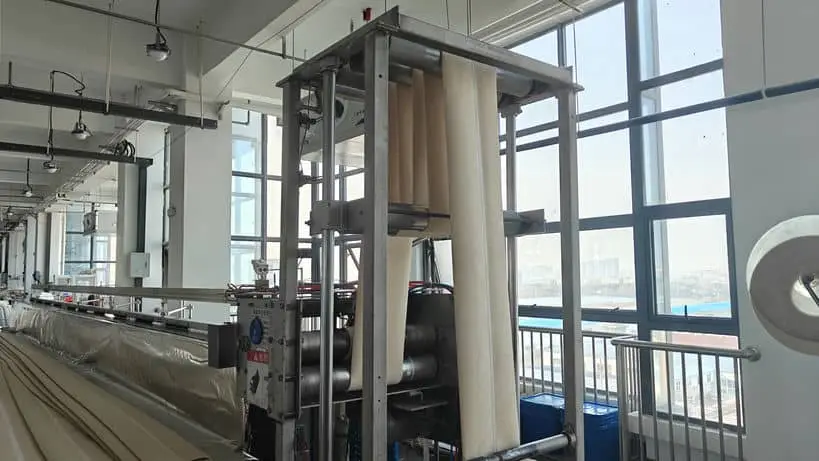
Equipment knowledge matters when optimizing control.
Filtration materials, catalyst behaviour and treatment-equipment constraints influence how a control strategy performs. Discuss engineering, commissioning and continuing support as one delivery scope.
YuanChen manufacturing facility · Company website photography.
08 / PROCUREMENT & TECHNICAL QUESTIONS
Before you start.
Must all three treatment systems be upgraded together?
No. Start with the module that addresses the most material operating problem, then expand based on validated data and results.
Does this replace the DCS?
The integration is designed around the existing DCS and site protection. Define basic control, optimization authority, interlocks and operator responsibility explicitly.
Is a shutdown required?
Software and data work differ from field-instrument, valve, cabinet or equipment modifications. The implementation plan identifies which activities require an outage or planned access.
How are savings and payback evaluated?
Use comparable operating conditions and verified metering boundaries. Calculate project-specific energy, reagent, maintenance and lifecycle costs using the agreed measurement basis.
What if a critical measurement or model becomes unreliable?
Specify data-quality thresholds, suspension of affected optimization, operator notification, manual takeover and fallback during design and commissioning.
What information is needed for the first discussion?
Begin with industry, unit or equipment type and the main operating issue. Process diagrams, operating trends and instrument/interface lists can follow.
09 / PROJECT ASSESSMENT
Start with your operating challenge.
Choose the system and your priority. You do not need a complete engineering package to begin.
Choose your starting point.
DeNOx / ESP or baghouse / Wet FGD / Ash conveying / Whole-island coordination
For the first message: industry, system type, equipment scale, plant location, main issue and preferred contact details.
Request a technical assessment ↗See the platform and discuss fit.
Ask to review a relevant interface, module workflow and integration example. Availability and demonstration scope are confirmed by the technical team.
Discuss a platform demonstration ↗