
FMS and P84 filter bags are both considered in cement and mineral-processing baghouses, but a kiln plant is not one uniform application. Raw mill, kiln, clinker cooler, cement mill and material-transfer points can expose bags to different temperatures, dust loads, abrasion and chemistry. The media decision should follow the process section.
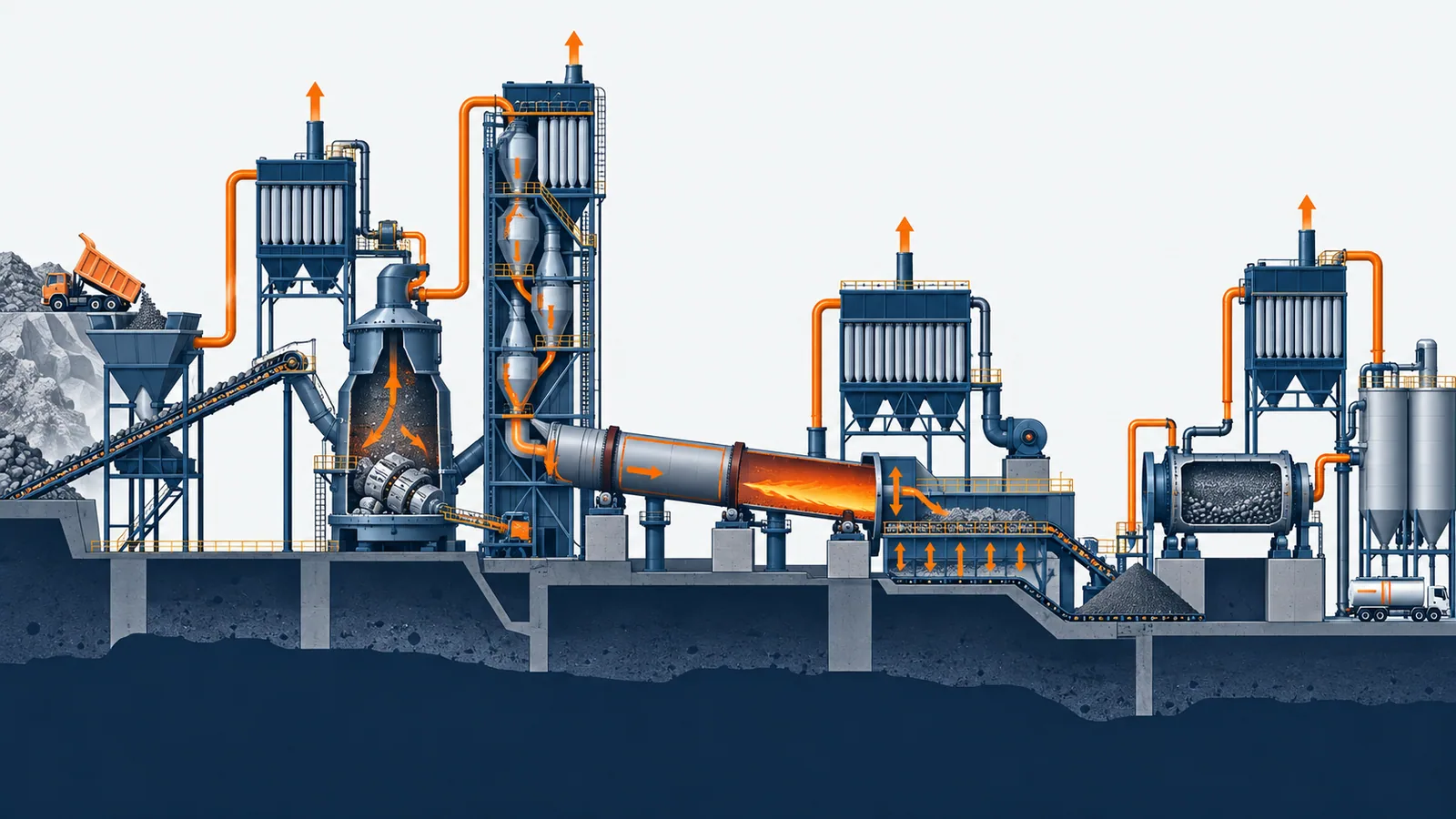
Split the cement plant into process sections
For each baghouse, record gas temperature, moisture, dust loading, particle size, abrasion, acid gases, operating mode and cleaning settings. Include whether the unit sees kiln start-up, raw mill on/off changes, false-air ingress or material carryover.
| Process section | Primary concern | Data to collect | Selection implication |
|---|---|---|---|
| Raw mill | Moisture, condensation and fine dust | Gas profile, dew point and dust cake | Prioritise stable release and moisture control |
| Kiln / bypass | Heat, chemistry and upset exposure | Temperature trend, gases and excursions | Require construction-specific thermal review |
| Clinker cooler | Abrasion and hot dust | Dust size, airflow and inlet pattern | Check mechanical strength and distribution |
| Cement mill | Fine dust and pressure drop | Loading, fineness and cleaning | Compare surface finish and cleaning response |
| Transfer points | Abrasion and variable airflow | Dust character and leakage | Fit and wear protection may dominate |
FMS constructions: stable high-temperature service when mechanically protected
FMS usually refers to a fiberglass-based composite construction selected for demanding temperature and dimensional stability requirements. The actual blend, finish, membrane and sewing details must be stated. FMS can be sensitive to bending, abrasion and installation damage, so cage condition and handling are part of the specification.
P84 constructions: fine-fibre filtration and application fit
P84 is often considered where fine dust capture and a high-temperature felt construction are needed. Buyers should confirm the blend, basis weight, finish, temperature definition, chemical boundary and cleaning guidance. P84 is not a universal answer for every kiln section; moisture, chemistry and mechanical conditions still control risk.
| Comparison item | FMS | P84 | Review rule |
|---|---|---|---|
| Temperature | Confirm composite construction and excursion margin | Confirm blend and continuous-duty definition | Compare the same temperature basis |
| Fine dust | Depends on finish and membrane | Fine-fibre structure may be beneficial | Use outlet and pressure-drop data |
| Abrasion | Inspect flexing and cage contact risk | Confirm weight, finish and support | Map wear before changing media |
| Moisture | Check condensation and handling sensitivity | Check hydrolysis and cake release | Include raw-mill operating modes |
| Cleaning | Avoid excessive flex and pulse energy | Match pulse settings to construction | Review controller data and alignment |
The quotation fields that prevent confusion
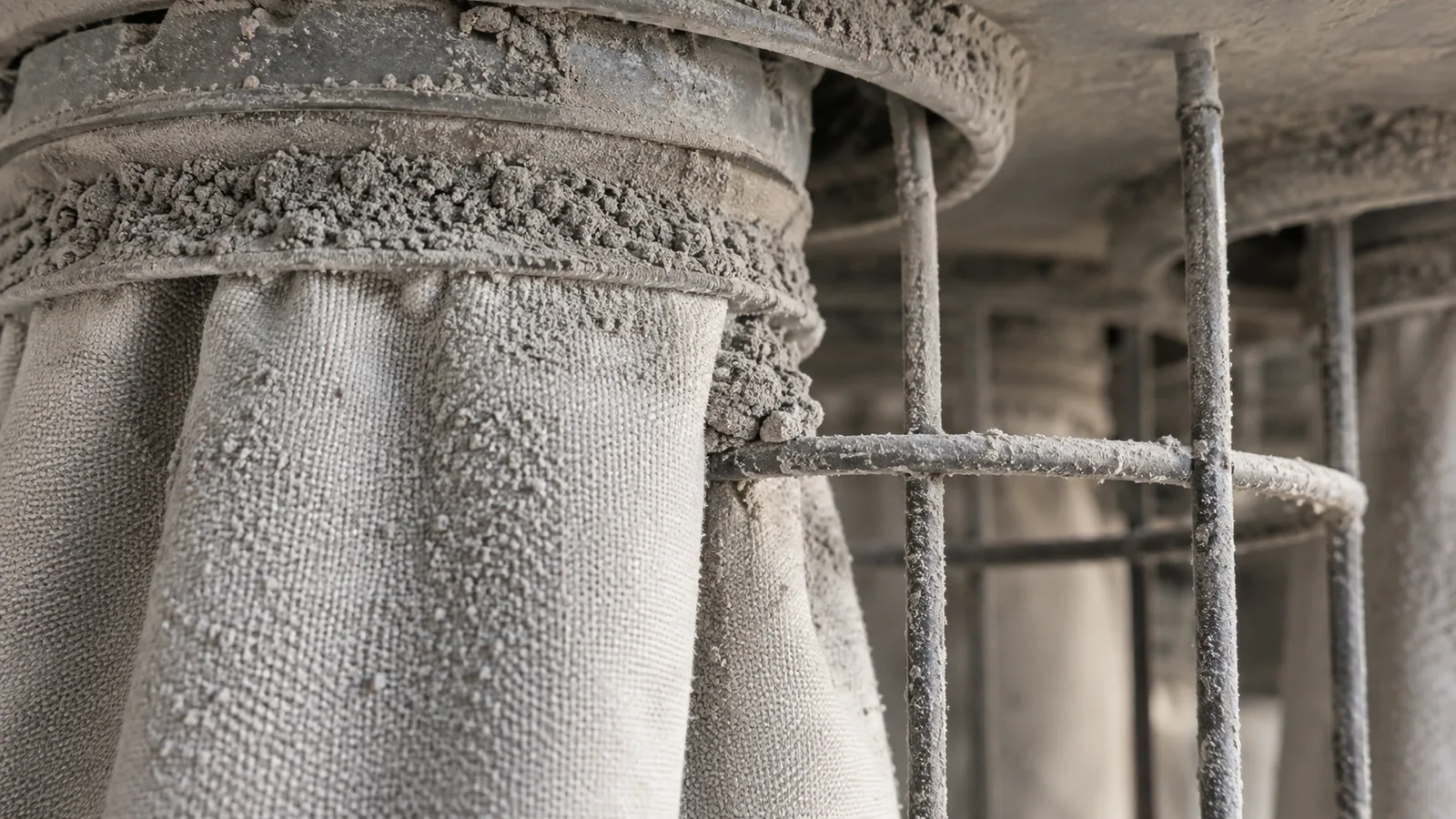
Ask each supplier for a bag drawing, media cross-section, basis weight, finish, seam, top and bottom construction, temperature definitions, recommended air-to-cloth range and cleaning settings. Include a photo of the old bag, cage and failure zone. “FMS” or “P84” alone is not a complete specification.
Select by process section, then verify the system
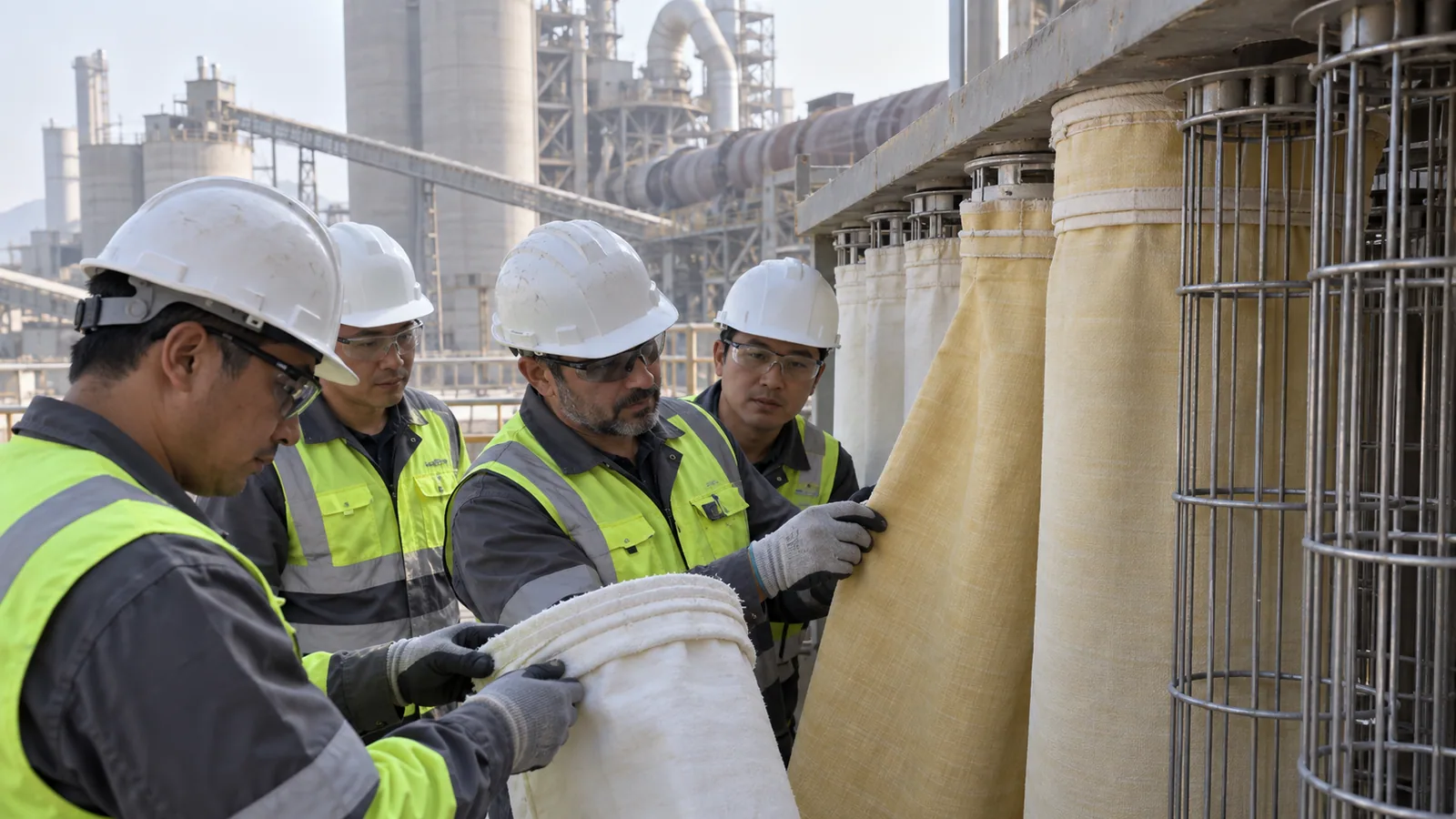
The best media choice can still fail if the cage is bent, the venturi is missing, the inlet flow is uneven or the dust cake is washed by condensation. Inspect the baghouse before approving an upgrade. For a cement plant, a section-by-section matrix is more useful than one plant-wide material rule.
Closing checklist
- Identify the exact process section.
- Record temperature, moisture, chemistry, dust and cleaning.
- Compare complete constructions and fit.
- Review failure evidence and cage condition.
- Ask for a technical recommendation tied to the collected data.
YuanChen can review the operating worksheet, drawings and photos to narrow the FMS or P84 shortlist for each cement-process baghouse.